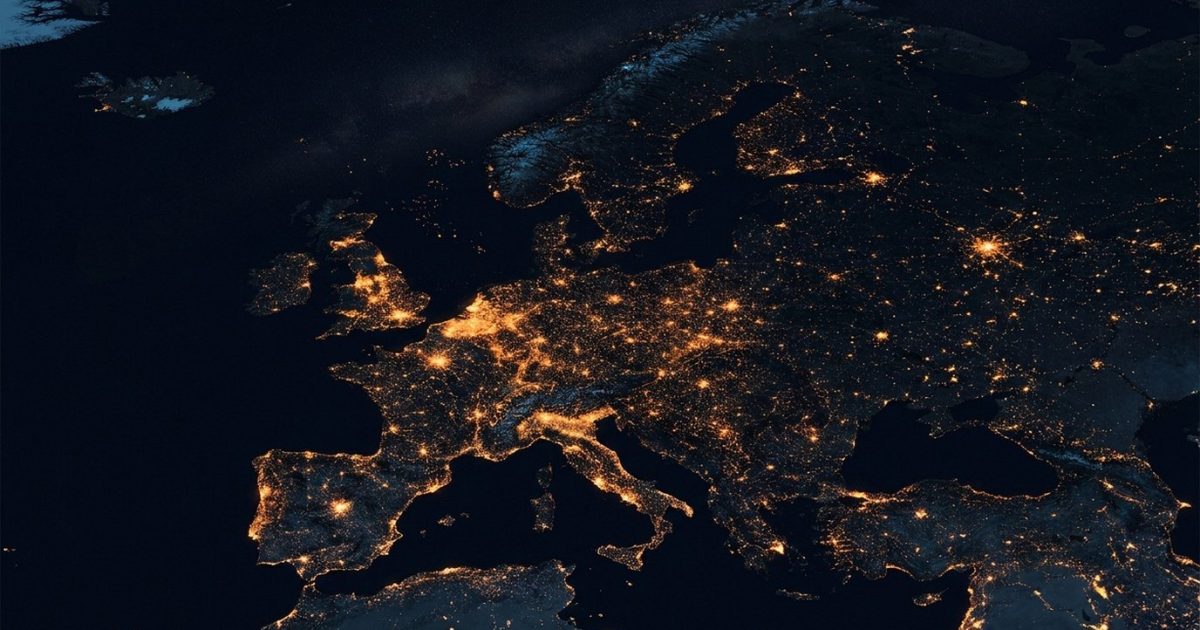
Light pollution is the excessive or misdirected artificial light that brightens the night sky, disrupts ecosystems, and impairs human health. Unlike the US-dominated discourse on this subject, this guide draws on COST Action ES1204 LoNNe research and European measurement data. You will leave with a complete, evidence-based picture — from physics to policy.
What Is Light Pollution? Definition and Scale
Light pollution is any artificial light that escapes beyond its intended purpose, collectively brightening the night sky to harmful levels.
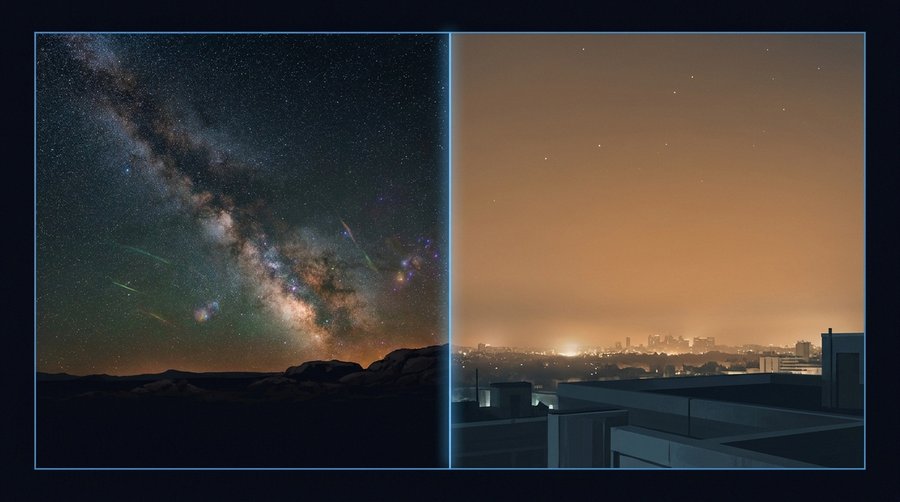
The definition sounds simple. The scale is not. According to the landmark study by Falchi et al. published in Science Advances in 2016, more than 80% of the world’s population — and over 99% of Europeans and Americans — now live under skies that are measurably brighter than natural darkness. The Milky Way is invisible to roughly 60% of Europeans. These are not astronomical curiosities. They are indices of an environmental condition that operates continuously, invisibly, and with documented biological consequences.
The scientific literature uses a specific term: ALAN, for artificial light at night. The distinction matters. Not all artificial light constitutes light pollution — a desk lamp inside your kitchen affects nobody outside. ALAN becomes light pollution the moment it crosses the intended boundary: shining upward into the sky, sideways into a bedroom window, or with far more intensity than the task demands. The COST Action ES1204 research network LoNNe (Loss of the Night Network), active 2013–2017 under coordination by the Leibniz-Institute of Freshwater Ecology and Inland Fisheries (IGB) in Berlin, established standardised measurement frameworks for exactly this problem — frameworks that remain the European baseline today.
ALAN — The Research Term That Changes Everything
Before ALAN became the standard research term, the field lacked a shared language. Astronomers talked about sky brightness. Ecologists talked about photoperiod disruption. Health researchers talked about circadian interference. The ALAN framework, consolidated through LoNNe’s intercomparison campaigns and the Falchi et al. World Atlas, unified these strands under one measurable quantity: the intensity and spectral composition of outdoor artificial light during nighttime hours.
That unification has practical consequences. It means a lighting engineer designing a road in the Netherlands and an ecologist tracking moth populations in Switzerland are, formally, studying the same variable. Light pollution is not a metaphor. It is a measurable physical quantity with standardised units (mag/arcsec², cd/m², mW/cm²/sr) and — increasingly — legally binding thresholds.
How Much Sky Have We Lost? (World Atlas, Falchi 2016)
Falchi et al. 2016 modelled artificial sky brightness using VIIRS Day/Night Band satellite data calibrated against more than 35,000 ground observations. The results were stark. Across Europe, 88% of the land surface experiences light-polluted skies by the atlas’s definition. Global artificial light emissions were growing at 2–10% per year at the time of publication — a rate that, compounded, represents an enormous acceleration of the problem within a single human generation.
Noctalgia — the grief associated with losing access to the natural night sky — is not a clinical diagnosis but it names something real. Entire generations in Western Europe have never seen the Milky Way from where they live. For more on the cultural and psychological dimension of this loss, see our dedicated article on noctalgia and the language of losing the night sky.
Europe’s Uneven Skies (Kyba 2017)
Kyba et al. 2017, published in Science Advances, tracked changes in Earth’s artificially lit outdoor surface between 2012 and 2016 using the first calibrated satellite radiometer designed for night-light measurement. The finding: the lit area grew by 2.2% per year globally, with total radiance increasing at 1.8% annually. Europe is not uniform in this. Nations with strong lighting regulation — France chief among them — showed measurable reductions. The contrast with densely lit regions of the BeNeLux, Po Valley, and North Rhine-Westphalia is visible from orbit.
For those wanting to assess where specific European locations stand, see our companion article on dark sky places across Europe.
The Five Forms of Light Pollution
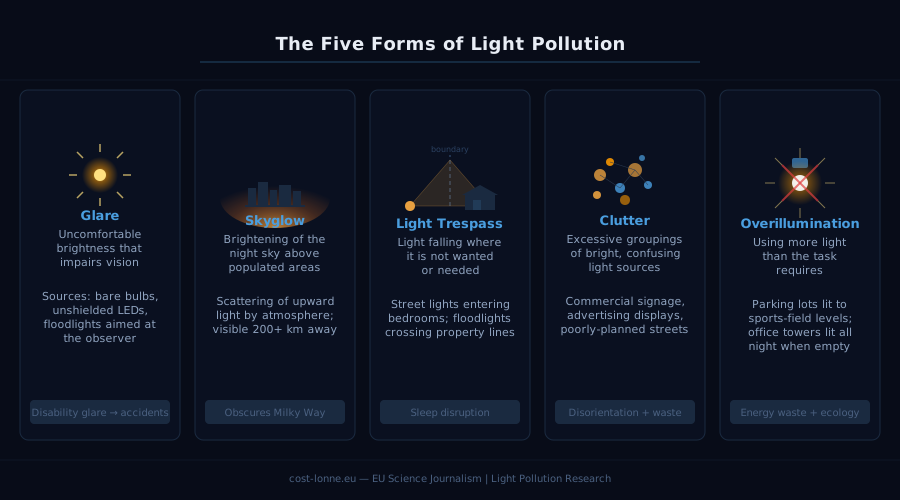
Light pollution takes five distinct forms — each with different sources, visibility patterns, and ecological consequences.
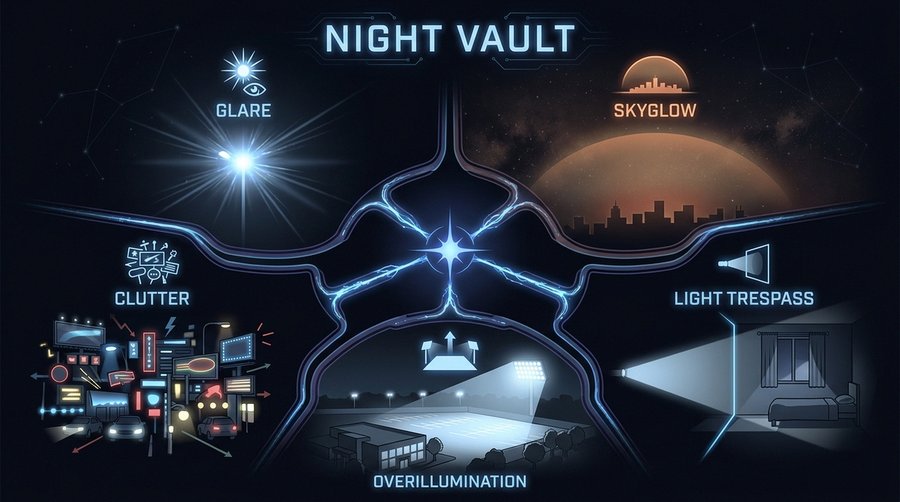
The umbrella term light pollution covers qualitatively different phenomena. Treating them as one thing produces bad policy. A curfew that eliminates clutter does nothing about glare. A shielding requirement that solves light trespass may leave skyglow untouched. Precision matters.
Skyglow
Skyglow is the diffuse brightening of the night sky above inhabited areas, caused by light scattering off atmospheric particles — water droplets, aerosols, dust. It is cumulative: every unshielded luminaire within a region contributes to a shared glow that extends well beyond the city boundary. Studies show skyglow from large metropolitan areas is detectable 200 km away under clear-sky conditions. This is the form of light pollution that erases stars wholesale and forms the backdrop against which all other forms operate.
Glare
Glare is the visual discomfort or impaired vision caused by excessive luminance — typically from unshielded light sources in the direct field of view. It is the form of light pollution most immediately felt by humans: the LED streetlight that blinds you as you cycle, the floodlit car park that makes it impossible to see the footpath beyond. The Illuminating Engineering Society of North America (IESNA) has documented correlations between high-glare road lighting and elevated accident rates among older drivers, whose eyes scatter more light across the retina. Over-illumination and glare are related but not identical — a luminaire can be very bright without causing glare if it is correctly aimed and shielded.
Light Trespass
Light trespass is light falling where it is neither wanted nor needed. The classic case: a security floodlight that illuminates a neighbour’s bedroom at 2 a.m. At the ecosystem scale, light trespass from road and building lighting reaches forest edges, river corridors, and agricultural margins — spaces that many species depend on as refugia from ALAN. Roughly 30% of outdoor lighting in EU member states is estimated to constitute unnecessary illumination, including light trespass components.
Clutter
Clutter refers to the visual confusion created by excessive groupings of bright, competing light sources — advertising signs, building facades, commercial districts. It is the dominant form of light pollution in southern European cities and in urban commercial zones across the continent. Beyond aesthetics, clutter creates disorientation hazards for migrating birds and disrupts the nocturnal-foraging cues of species that rely on contrast between lit and dark zones.
Over-Illumination
Over-illumination is simply lighting at far higher intensities than the task requires. A warehouse lit to office standards at 3 a.m. when no one is working. Motorway lighting that meets M1 class standards on a rural B-road with minimal traffic. Over-illumination is the most straightforward form to address — it requires no new technology, only correct calibration of existing systems. It is also, arguably, the most pervasive.
What Causes Light Pollution?
Most light pollution stems not from how much we light, but from how badly designed and poorly regulated that lighting is.
The causal story of light pollution is often misunderstood as a story of growth — more people, more light. That is partial at best. The more accurate framing: light pollution is primarily an engineering failure and a regulatory gap, not an inevitable consequence of economic development.
Bad Design vs. Bad Policy
Street and road lighting accounts for approximately 50% of all outdoor light in Europe. The majority of legacy installations direct a significant fraction of their output horizontally or upward — straight into the atmosphere, illuminating nothing useful. Replacing a conventional high-pressure sodium lantern with an unshielded LED of equivalent lumen output does not reduce light pollution. It may worsen it, because LEDs at high correlated colour temperatures (CCT) — typically above 4,000 K — emit proportionally more blue-spectrum light. Blue-rich light at wavelengths below 500 nm scatters 4–5 times more efficiently in the atmosphere than longer-wavelength warm light, per Rayleigh scattering physics. The result: the same quantity of lumens produces a brighter skyglow when the source is blue-rich.
Policy has not kept pace. EN 13201, the EU’s road-lighting standard, defines performance classes (M1–M6) based on luminance and glare thresholds but imposes no requirement on spectral composition. A municipality can comply fully with EN 13201 while installing 5,000 K LEDs that maximise sky-glow contribution. That is a structural gap in European lighting regulation — discussed in detail in our article on EN 13201 and what Europe’s standard leaves out.
The LED Rebound — Why Efficiency Isn’t Enough
Here the economics become uncomfortable. LED technology is genuinely more energy-efficient than its predecessors. Yet between 2012 and 2016 — the years Kyba et al. 2017 measured — the global artificially lit area grew by 2.2% per year. In countries that aggressively adopted LED street lighting, total light output increased. Portugal is the case study: after a nationwide LED retrofit programme, satellite measurements showed a roughly 120% increase in total nighttime radiance in retrofitted areas. Lower running costs had justified more fixtures and higher lumen packages than the previous sodium lamps delivered.
This is the Jevons Paradox applied to lighting — a principle first articulated in the context of coal efficiency by the 19th-century economist William Stanley Jevons: efficiency improvements reduce the per-unit cost of a service, which increases demand, which erases the efficiency gain. For a detailed examination of the LED rebound evidence, see The LED Paradox: Jevons, Portugal +120%, and why efficiency backfired.
A New Source: Satellite Constellations
Until recently, the sources of light pollution were all ground-based. That changed with the deployment of large satellite constellations. SpaceX’s Starlink network surpassed 5,000 operational satellites by late 2024. The reflective surfaces of these satellites — particularly in the hours after twilight and before dawn — add measurable brightness to astronomical observations and to the background sky brightness detectable by sensitive instruments. This is an emerging and unregulated source. International astronomy bodies have documented the interference; mitigation measures (anti-reflective coatings, orbital manoeuvers) exist but are voluntary and incomplete.
How Light Pollution Harms Human Health
Artificial light at night suppresses melatonin, disrupts circadian biology, and is linked to cancer, diabetes, and depression through well-documented mechanisms.
The health effects of light pollution are not hypothetical. They run through a precisely characterised biological pathway, from photon to hormone to cell-cycle regulation. The evidence base is now large enough that the World Health Organization’s cancer research arm has twice classified the underlying exposure — night-shift work involving circadian disruption — as a probable carcinogen.
Circadian Rhythm and the Biology of Darkness
Every mammal, including Homo sapiens, runs an approximately 24-hour internal clock — the circadian rhythm — governed by the suprachiasmatic nucleus (SCN) in the hypothalamus. This clock is calibrated daily by light. Specifically, by the ratio between bright daytime light and genuine darkness at night. ALAN corrupts that calibration signal. When the night is not dark — when light trespass holds bedroom illumination at levels far above natural moonlight — the SCN misreads the time of day and downstream hormonal, metabolic, and immune processes run out of phase.
Sleep disruption is the most immediately visible consequence. Across EU urban populations, estimates suggest approximately 35% of city dwellers report clinically significant sleep disturbances, with ALAN among the contributing environmental factors. The relationship is not one of personal choice or screen use alone — it is also a matter of the light environment outside the building.
Melatonin Suppression — The Mechanism
Melatonin — the hormone that signals darkness to the body — is synthesised by the pineal gland in response to SCN output. Its production is suppressed by light via a specific retinal pathway. Intrinsically photosensitive retinal ganglion cells (ipRGCs) contain the photopigment melanopsin, which is maximally sensitive at approximately 480 nm — the blue-cyan portion of the visible spectrum. Brainard et al. 2001, published in the Journal of Neuroscience, established this action spectrum and demonstrated that conventional cone photoreceptors are insufficient to explain the degree of melatonin suppression observed at short wavelengths.
The clinical implication is direct. Blue-enriched light — the spectral signature of most white LEDs at 4,000 K and above — is the most potent suppressor of melatonin production, far more so than the warm high-pressure sodium lamps it replaced. Harvard Health research comparisons have shown that exposure to blue-enriched light suppresses melatonin for roughly twice as long as green light of comparable photopic illuminance. Warm-white LEDs at or below 2,700 K reduce melanopic irradiance substantially compared to cool-white equivalents, as quantified in the CIE S 026 framework.
For a full mechanistic account of the ipRGC-to-pineal pathway, see Melatonin and artificial light: the ipRGC-to-pineal signal pathway.
Cancer, Diabetes, Obesity: What the Research Shows
The International Agency for Research on Cancer (IARC) classified shift work involving circadian disruption as a Group 2A probable carcinogen in 2007. In 2019, with IARC Monograph 124, the classification was retained on the basis of limited human evidence (breast, prostate, colorectal cancers) plus sufficient animal evidence and strong mechanistic data. The epidemiological literature on ALAN specifically — as distinct from full shift-work exposure — is less mature but directionally consistent. Women who sleep in lit environments show associations with elevated breast cancer incidence in several prospective cohort studies. The mechanism runs through melatonin: the hormone has direct oncostatic properties, and its suppression by ALAN removes a nightly brake on cellular proliferation.
Type 2 diabetes and metabolic disruption show similar mechanistic consistency. Circadian rhythm disruption impairs insulin sensitivity and alters glucose metabolism on timescales of days to weeks, demonstrated in controlled human studies. Light pollution is one chronic, low-level stressor within this causal chain. For the full epidemiology, see Light Pollution and Human Health: The Science of Darkness, Disrupted.
The Nordic Problem — Extreme Seasonality
Stockholm sits at 59°N. In December, the city receives fewer than seven hours of daylight. Tromsø, at 69°N, sees none at all for roughly two months. The Scandinavian case reveals a paradox that has received insufficient attention in the light pollution literature.
Populations adapted over millennia to polar night have evolved — or at least developed — physiological flexibility in their circadian response. Akerstedt and colleagues at the Karolinska Institute have documented that Scandinavian subjects show somewhat different melatonin profiles across the annual cycle than mid-latitude populations, with the body partially compensating for extreme photoperiodic variation. But ALAN disrupts this adaptive plasticity twice: it shortens the effective winter darkness that the adaptation depends on, and it introduces high-CCT blue-spectrum illumination at exactly the wavelengths the ipRGC system is most sensitive to. The result is a population that has lost both its ancestral cue (genuine winter darkness) and its modern backup (controlled indoor light).
This is not a minor academic footnote. It defines the specific vulnerability of northern European populations to LED-era light pollution in ways that mid-latitude health data do not capture. For a deeper examination, see Nordic chronobiology: polar night, midnight sun, and the ALAN paradox.
Ecological Consequences
Light pollution reshapes entire ecosystems by altering migration, reproduction, and predator-prey dynamics across nearly every species group studied.
The ecological literature on ALAN has expanded rapidly since 2010. What was once a list of anecdotal observations — moths dying at streetlights, sea turtles disoriented by beach hotels — is now a body of experimental and observational science comprehensive enough to support regulatory arguments. The common thread: most animals on Earth have evolved over hundreds of millions of years to rely on a consistent light-dark cycle. ALAN introduces a novel stimulus for which evolutionary biology has had no time to adapt.
Birds and Migration
Nocturnal bird migration is one of the most ancient and precisely calibrated behaviours in vertebrate biology. Billions of birds migrate at night across Europe each year, navigating by stars, magnetic fields, and the polarisation of twilight. ALAN interferes with all three cues. Attracted to lit urban areas, birds lose orientation, collide with illuminated buildings, and exhaust themselves circling light sources when they should be on course.
Estimates from North American studies — where the data infrastructure is most complete — put annual bird mortality from building collisions at between 365 million and nearly one billion individuals per year, with ALAN as a primary contributor. The scale in Europe is poorly quantified but is understood to be substantial. A 2017 PNAS study documented that a single high-intensity urban light installation in New York City could displace the migration of thousands of birds from their normal routes in a single night. For species-specific data on European migratory birds, see Light pollution and birds: migration, collision, and the Shell L15 experiment.
Insects and Pollinators
Phototaxis — the instinctive movement of insects toward light sources — is the most visible symptom of the insect-ALAN interaction. But it is not the most consequential. Knop et al. 2017, published in Nature, conducted a field experiment in Swiss meadows, exposing some plots to street-lamp-equivalent ALAN while leaving control plots dark. The result: nocturnal pollinator visits to flowers in lit meadows fell by 62% compared to dark controls. Fruit set in the affected plants dropped 13% by end of season.
The implications cascade. Nocturnal pollinators — moths, beetles, some flies — visit plants at night that day-active pollinators miss. Knop’s team further showed that the disruption to nocturnal pollination networks propagates into daytime communities, because the plant-pollinator network is interconnected. Lose the nocturnal layer and the diurnal layer destabilises too. Light pollution is not merely an insect problem. It is an agricultural and food-system problem dressed in entomology. For the full analysis see Light Pollution and Wildlife: How ALAN destroys ecosystems.
Sea Turtles and Coastal Ecosystems
Female sea turtles nest on the same beaches where they hatched, navigating by Earth’s magnetic field and by the faint luminosity of the open ocean horizon. Hatchlings, once they emerge, orient toward the brightest horizon — which on a natural beach is the open sea. Coastal lighting reverses this gradient. Florida Fish and Wildlife data document that at illumination levels above 1 lux, virtually 100% of hatchlings disorient toward land. They die of dehydration, predation, or road collisions before reaching the water.
The Mediterranean basin — where loggerhead and green turtle nesting beaches coincide with some of Europe’s most intensively lit coastlines — is the critical theatre for this problem on the European side of the Atlantic.
Plants, Bats, and Overlooked Species
Plants are not passive in this picture. Photoperiod — the ratio of light to dark — governs flowering time, dormancy, and leaf senescence in most temperate species. ALAN extending the effective day length shifts phenology. Trees in lit urban areas retain their leaves weeks longer than rural counterparts, consuming resources at the wrong season and altering the timing of litter fall that invertebrates and birds depend on downstream.
Of Europe’s bat species, studies indicate that five of nine common species actively avoid illuminated foraging corridors — a problem compounded because the same insects they hunt are simultaneously attracted to streetlights and depleted by phototaxis mortality. The collision of these two effects creates a light trap dynamic: concentrating prey around lights while chasing away the predators that regulate prey populations in darkness.
How to Reduce Light Pollution
Reducing light pollution requires four simultaneous levers — better fixture design, lower colour temperature, smart controls, and enforceable regulation.
The technical solutions to light pollution are, in the main, well understood. The implementation gap is primarily political and economic, not scientific. Several European jurisdictions have demonstrated that meaningful reductions are achievable within a single planning cycle when the regulatory will is present.
Five Principles of Responsible Outdoor Lighting
The International Dark-Sky Association and the Illuminating Engineering Society of North America jointly codified five principles that responsible outdoor lighting should satisfy: the light should be useful (serving a genuine purpose), targeted (directed only where needed), low level (no brighter than the task requires), controlled (using timers, dimmers, or motion sensors), and warm (using the lowest effective colour temperature). These principles are not aspirational. Each maps directly to a measurable fixture specification. A luminaire that fails any one of the five is, by definition, contributing to light pollution.
CCT and Spectrum — Choosing the Right Light (<3000K)
Correlated colour temperature (CCT) is the single most consequential spectral choice in outdoor lighting. Research quantified in the CIE S 026 framework and corroborated by multiple independent studies shows that reducing CCT from 4,000 K to 3,000 K or below substantially reduces the melanopic component — the fraction of spectral power that activates ipRGCs and suppresses melatonin. Warm-white LEDs at or below 2,700 K reduce melatonin-suppression potential by approximately 60% compared to cool-white equivalents at 4,000 K.
The ecological case is equally strong. Insects are most attracted to short-wavelength light. Amber LEDs and warm-white LEDs at 2,200–2,700 K attract dramatically fewer insects than neutral or cool white at equivalent lumen output. Spectral choice is, in effect, the fastest and cheapest pollution-reduction tool available to municipalities retro-fitting street lighting — yet it remains the least regulated dimension of the problem.
Shielding, Dimming, and Curfews
Full cut-off fixtures — luminaires that emit no light above the horizontal plane — are the structural fix for upward-directed light. They are not universally mandated. Adaptive dimming (reducing luminaire output by 30–50% after midnight when traffic volumes drop) has been shown to cut street-lighting energy consumption by 30–50% without safety compromise, per EU energy agency analyses. Curfews — switching off non-essential decorative and advertising lighting between midnight and 5 a.m. — have been adopted by several French communes under the 2018 lighting decree with measurable sky-brightness reductions. France’s national programme, coordinated by the Association Nationale pour la Protection du Ciel et de l’Environnement Nocturnes (ANPCEN), documented that certified communes in its Villes et Villages Étoilés programme use approximately 33% less total outdoor lighting than the French national average; France’s national statistics office (SDES) separately reports a 19% reduction in high-level light-pollution exposure across mainland France between 2014 and 2023.
For the full policy analysis, see France’s 2018 lighting decree and the Villes Étoilées label programme. For the broader engineering and regulatory picture, see How to reduce light pollution: engineering, policy, and ecological design.
EN 13201 and What Europe’s Standards Miss
EN 13201 is Europe’s primary road-lighting standard. Its classification system — M1 through M6, with M1 requiring the highest maintained luminance of 2.0 cd/m² and M6 the lowest at 0.3 cd/m² — governs public road lighting across EU member states. The standard specifies luminance uniformity, glare limitation (expressed as threshold increment, TI), and disability glare control.
What EN 13201 does not specify: CCT. There is no spectral quality requirement. A municipality can achieve full M1 compliance with a 6,500 K blue-rich LED installation that maximises both skyglow and melatonin suppression. LoNNe explicitly recommended — in its published outputs — that proposed minimum street lighting levels should be significantly reduced and that spectral requirements should be added to the standard. As of 2024, neither recommendation has been incorporated. That is a subtraction, not progress. The CCT gap in EN 13201 is the single most significant unaddressed policy failure in European lighting regulation.
Dark Sky Reserves in Europe
Dark sky protection areas are the territorial response to light pollution. Galloway Forest Park in Scotland received the International Dark-Sky Association’s first European Dark Sky Park designation in November 2009 — the fourth such designation in the world. Since then, the network has expanded to include reserves in Ireland (Kerry International Dark Sky Reserve, the northern hemisphere’s first Gold Tier reserve with permanent resident communities), Germany (Westhavelland, 60 km from Berlin), the Rhön Biosphere Reserve, and multiple sites in Spain, France, and Scandinavia. These are not merely tourist destinations. They are functioning scientific reference sites — places where baseline sky darkness is monitored over years to detect regional trends and evaluate the effect of mitigation measures.
How to Measure Light Pollution Near You
Anyone can measure local sky quality with a smartphone app or a Sky Quality Meter — no telescope required.
Measurement is where citizen science and professional research intersect productively. COST Action ES1204 LoNNe ran four intercomparison campaigns between 2014 and 2017 specifically to assess the reliability of low-cost instruments in field conditions — including the Sky Quality Meter that any motivated observer can purchase for around 100 EUR. The result: consistent, reproducible data that has contributed to peer-reviewed publications and fed into European policy discussions.
The Bortle Scale Explained
John Bortle developed his nine-class scale in 2001, published in Sky & Telescope, as a qualitative assessment of night-sky quality. Class 1 represents the darkest possible skies — SQM readings of 21.7 mag/arcsec² or above, in which the gegenschein and zodiacal band are visible to the naked eye. Class 9 represents an inner-city sky so bright that only the Moon and a handful of the most luminous planets and stars are visible. Most EU urban centres measure Class 7–8 on the Bortle scale. Rural areas 40–80 km from major cities typically measure Class 4–5. Genuinely Class 1 sites in Europe are now confined to a small number of protected reserves and remote mountain or island locations.
SQM — Your Sky Quality Meter
The Sky Quality Meter (SQM), produced by Unihedron, is a handheld photometer that reports sky brightness in astronomical magnitudes per square arcsecond. Higher numbers mean darker skies. A Class 1 site reads ≥21.7 mag/arcsec²; a typical European city reads 17–18 mag/arcsec².
Walker’s Law — the empirical relationship established by Merle Walker at Lick Observatory in 1977 — gives a first approximation of how skyglow scales with urban size and distance: b = C × P × d−2.5, where b is sky brightness in nanoLamberts, P is city population, d is distance in appropriate units, and C is an empirical constant. The formula holds reasonably well for distances up to 50–100 km; at greater distances, curvature and horizon shielding cause faster falloff than the model predicts. The SQM-L variant (with a narrower acceptance lens for more spatially precise readings) became the standard instrument in LoNNe intercomparison campaigns and is the recommended choice for anyone contributing data to research-grade monitoring networks. For a detailed comparison of SQM variants, see SQM Buyer’s Guide: L vs. LU vs. LU-DL.
For the methodology behind LoNNe’s measurement campaigns and what four field tests revealed, see The LoNNe Intercomparison Campaigns (2014–2017). For a broader overview of research-grade instruments and methodologies, see Measuring Light Pollution: Methods, Data, and Research Tools.
Globe at Night — Citizen Science in Practice
Globe at Night, operated by NOIRLab (National Optical-Infrared Astronomy Research Laboratory), runs annual campaigns in which participants worldwide estimate naked-eye star visibility using printed or digital magnitude charts and submit their location and observation via smartphone. Since 2006, the programme has collected more than 200,000 measurements from observers in over 180 countries. The data complements instrument-based monitoring by providing spatial coverage that no fixed sensor network could achieve. European participation has been strong, particularly in France, Spain, and Germany — countries with active dark-sky advocacy communities. The data is publicly archived and has been used in peer-reviewed analyses of sky-brightness trends.
Frequently Asked Questions
Does more light mean more safety?
Light pollution research does not support a simple link between increased outdoor light and reduced crime or road accidents. A 2015 BMJ study by Steinbach et al. found no significant increase in road collision rates in UK areas that dimmed or switched off street lighting at night — a result that surprised many policymakers. Glare from over-bright light pollution can reduce visibility for older pedestrians and drivers, producing the opposite of the intended safety effect. Well-designed, targeted lighting improves safety; indiscriminate over-illumination does not.
Can I still see the Milky Way from Europe?
Falchi et al. 2016 found that the Milky Way is invisible to approximately 60% of Europeans from their home locations due to light pollution. In most of northern and western Europe, genuine Milky Way visibility requires travelling to rural areas at least 40–80 km from significant urban centres and ideally to a designated dark sky reserve. Ireland’s Kerry International Dark Sky Reserve, Galloway Forest Park in Scotland, and Germany’s Westhavelland are among the closest accessible sites to major population centres.
Is LED lighting better or worse for light pollution?
LED technology is more energy-efficient than its predecessors, but evidence from Kyba et al. 2017 shows that global ALAN grew during the LED transition, not shrank. The efficiency gain reduced per-lumen cost, enabling more fixtures and higher total output — the Jevons Paradox. LED lighting at warm CCT values (≤2,700 K) with full cut-off shielding is better than the sodium lamps it replaces. Cool-white LEDs at 4,000–6,500 K with poor shielding are worse. Technology does not determine the outcome; spectral choice and fixture design do.
What is ALAN and how is it different from light pollution?
ALAN stands for artificial light at night — the technical term used in scientific literature since the early 2000s. All ALAN is artificial light produced at night; not all ALAN constitutes light pollution. A correctly shielded, appropriately dim, warm-spectrum streetlight is ALAN. It becomes light pollution when it exceeds the task requirement, escapes its intended area, or contributes to cumulative skyglow. The distinction allows researchers to isolate the harmful subset of nighttime illumination rather than treating all outdoor lighting as equivalent.
Which European countries have the darkest skies?
By land-area proportion with low light pollution, Scotland (particularly the Galloway and Cairngorms regions), Ireland (the Kerry peninsula), Norway and Sweden in northern latitudes, and parts of the Iberian interior (Alqueva Dark Sky Reserve, Portugal; Picos de Europa, Spain) rank among Europe’s darkest. Estonia and Latvia have relatively low population density — and the skyglow follows accordingly, measurably lower than in western European counterparts. Bortle Class 1 conditions in Europe are rare and confined almost entirely to designated dark sky reserves and remote island or alpine sites.