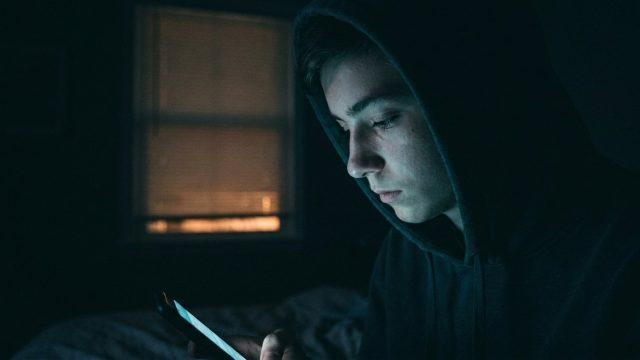
Children, Screens, and ALAN: Adolescent Chronobiology in Crisis
Young eyes are not small adult eyes. A ten-year-old’s crystalline lens passes approximately 85–90% of incoming blue light at 480 nm directly to the retina — where the ipRGC…
Circadian disruption, melatonin suppression, sleep quality, and epidemiological evidence linking residential ALAN exposure to health outcomes.
Young eyes are not small adult eyes. A ten-year-old’s crystalline lens passes approximately 85–90% of incoming blue light at 480 nm directly to the retina — where the ipRGC…
In 1987, Richard G. Stevens published a hypothesis in the American Journal of Epidemiology: electric light at night, by suppressing melatonin, might be driving the rise in breast…
The human circadian system evolved under a reliable pattern: bright days, dark nights, seasonal variation in photoperiod. Scandinavia inverts that pattern every year — twice. Two months of…
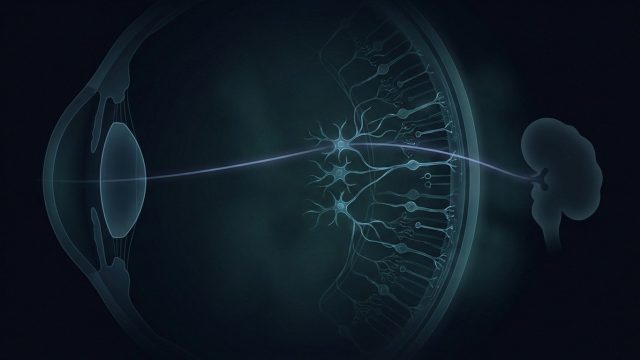
A photon enters the eye. Not a rod. Not a cone. A third class of retinal cell — the intrinsically photosensitive retinal ganglion cell, or ipRGC — absorbs…
Artificial light at night disrupts human biology at the cellular level — suppressing melatonin, destabilising the circadian clock that governs every organ system, and setting off a cascade…