Artificial light at night disrupts human biology at the cellular level — suppressing melatonin, destabilising the circadian clock that governs every organ system, and setting off a cascade that reaches from the retina to tumour biology. The term chronodisruption — formalised by Erren, Reiter, and Piekarski in 2003 and advanced by researchers including Anna Wirz-Justice’s group at the Psychiatric University Clinic in Basel — captures something more precise than the popular phrase “circadian disruption”: a systemic, chronic dysregulation that the Nordic paradox makes measurably worse. If you live in a city, work nights, or are over sixty, this is not a distant risk. For the physical science behind light pollution itself, see our overview of light pollution: science, ecology, and solutions.
The Body’s Internal Clock
Your body runs a precise 24-hour programme — light pollution corrupts the signal that keeps it synchronised.

Every cell in the human body runs an approximately 24-hour oscillator. Not metaphorically — molecularly. The CLOCK and BMAL1 genes drive transcription-translation feedback loops that are active in more than 90% of all human cell types, from liver hepatocytes to T-lymphocytes. These loops generate rhythms in gene expression, enzyme activity, hormone secretion, and cell division that persist even in isolated tissue cultures with no light input whatsoever. The biology predates electricity by hundreds of millions of years.
The clock, however, needs calibration. Without external time cues, it drifts. The cues that reset it are called zeitgebers — German for time-givers, a term formalised by Jürgen Aschoff in the 1950s. Light is the dominant zeitgeber for humans. Specifically: the transition from bright daylight to genuine darkness. That transition fires the signalling cascade that synchronises peripheral clocks across every organ system to a shared 24-hour phase.
Zeitgebers — What Sets Your Circadian Rhythm
The critical light-sensitive window is not sunrise. It is the two hours before dim-light melatonin onset (DLMO) — the moment, typically around two hours before habitual sleep, when the pineal gland begins melatonin secretion into the bloodstream. Light exposure in this window is particularly disruptive because it hits the circadian system at its most photosensitive phase, when even a modest signal can delay the clock by hours.
Cortisol operates on the same schedule from the opposite direction. The cortisol awakening response — a sharp rise in cortisol peaking 30 to 45 minutes after waking — is one of the most consistent circadian outputs in healthy physiology. Insulin sensitivity, core body temperature, immune cell trafficking, DNA repair enzyme activity: all are gated by the circadian clock, all vary by a factor of two to four over the 24-hour cycle. The 4:00 a.m. minimum in core body temperature is not incidental. It is the trough of a daily wave that shapes recovery, memory consolidation, and immune surveillance.
The 24-Hour Architecture of Human Biology
Chronodisruption — as distinct from the broader phrase “circadian disruption” — was coined in 2003 (Erren, Reiter, and Piekarski, Naturwissenschaften) to name something specific: not a single circadian shift, but a chronic, cumulative destabilisation of the temporal architecture across multiple biological systems simultaneously. A shift worker who has rotated night and day schedules for twenty years has not merely disrupted sleep. Their CLOCK/BMAL1 oscillators in peripheral tissues no longer synchronise reliably to the central pacemaker. Their immune system peaks at the wrong time of day. Their DNA repair enzymes are most active when they are working, not when cells are replicating. This is the phenomenon that the word “tired” does not begin to describe. For the full animal parallel, see how light pollution disrupts circadian rhythms across wildlife — the biological mechanism is conserved across vertebrates.
The Biology of Darkness: From Eye to Brain
A specialised retinal cell — not the rod or cone — detects artificial light and fires directly at your brain’s master clock.
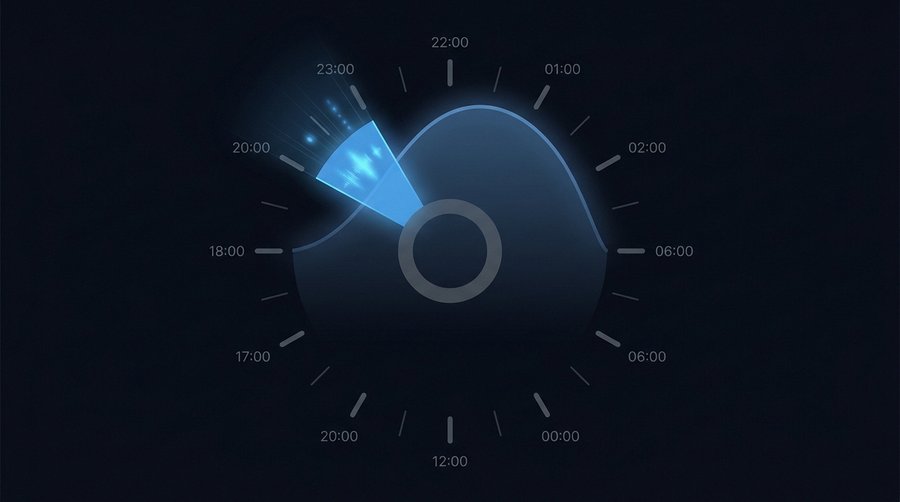
This is the section that no competitor article delivers. All six major competing sources on this topic name melatonin suppression. None of them explain how it works — the full neuronal pathway from photon to hormone. That pathway is now well-characterised, and it starts with a cell most people have never heard of.
How Your Retina Reads Nighttime (ipRGC and Melanopsin)
In 2002, David Berson and colleagues at Brown University, publishing in Science, demonstrated that a subset of retinal ganglion cells was directly photosensitive — independent of rods and cones. Hattar et al., also in Science in 2002, characterised the molecular basis: these cells express a photopigment called melanopsin, now understood to be the primary driver of non-visual light sensing in mammals. They are called intrinsically photosensitive retinal ganglion cells — ipRGCs.
The numbers are precise. The adult human retina contains roughly 3,000 ipRGCs, representing approximately one to three percent of all retinal ganglion cells. They are sparse. But their projections go directly where it matters. Melanopsin has a peak spectral sensitivity at approximately 480 nm — the blue-cyan portion of the visible spectrum, the same range that dominates white LEDs at 4,000 K and above. This is not coincidental biology. It is the reason that the LED revolution, which has made outdoor lighting more energy-efficient, has simultaneously made it more biologically disruptive.
The Suprachiasmatic Nucleus — Your Master Clock
ipRGC axons project via the retinohypothalamic tract (RHT) directly to the suprachiasmatic nucleus (SCN) in the anterior hypothalamus. The SCN is a paired structure of roughly 20,000 neurons that constitutes the master circadian pacemaker — the body’s central clock, which then synchronises peripheral oscillators in every major organ. When the SCN receives a photon-signal from ipRGCs, it interprets it as “daytime”. When it receives darkness — genuinely zero or near-zero photon flux — it initiates the hormonal cascade that defines night. Artificial light at night holds the SCN in a state of perpetual ambiguity: simultaneously detecting light signals from the environment while the social schedule demands sleep-phase behaviour.
Melatonin: Messenger of the Night
The SCN’s nighttime signal travels via the superior cervical ganglion to the pineal gland, which responds by synthesising and secreting melatonin into the bloodstream. Melatonin is often mischaracterised as a sleep hormone. It is better understood as a signal of darkness — it does not cause sleep, but informs every peripheral tissue that nighttime has arrived, triggering downstream processes timed to darkness: DNA repair, immune upregulation, tumour-suppressive mechanisms.
Melatonin suppression by artificial light was characterised in humans by George Brainard and colleagues, publishing in the Journal of Neuroscience in 2001. Their action spectrum study established that the threshold for melatonin suppression in humans lies at approximately 8 lux of white light — below the illuminance of a typical bedroom when a corridor light is left on. Short exposures are sufficient: even 15 minutes of bright artificial light around the DLMO window can markedly reduce melatonin output for hours. For the complete mechanistic deep-dive, including CIE S 026 melanopic irradiance calculations, see our dedicated article on the melatonin and ipRGC-to-pineal signal pathway.
How Much Light Is Too Much? (8 Lux, 480 nm, 15-Minute Threshold)
Eight lux is not a dramatic number. It is the illuminance on a horizontal surface approximately two metres from a single 60-watt incandescent equivalent LED in a small room. Harvard Health comparisons have shown that blue-enriched light (peaking near 480 nm) suppresses melatonin for approximately twice as long as green light of equal photopic intensity — an effect that Cajochen’s group at the University of Basel and others have documented in multiple controlled protocols. Practical implication: the CCT of the light source matters as much as its intensity. A 4,000 K LED at 8 lux is, by this metric, the equivalent of a 2,700 K LED at double the lux. This is the spectral case for warm-white street lighting that EN 13201 currently fails to enforce.
Sleep: The First Casualty
ALAN does not just delay sleep — it fragments it, cuts deep sleep short, and creates clinical diagnoses that most health articles label as lifestyle problems.
The first and most visible consequence of chronodisruption is sleep disturbance. Sleep disruption is often framed as personal — a matter of screen discipline, caffeine, or stress management. That framing is incomplete. The light environment outside and inside the building is a primary variable. ALAN in the bedroom environment, at levels as low as those entering through curtains from streetlights, has been associated with measurably shorter sleep duration in epidemiological data.
Insomnia, DSPD, and Shift Work Disorder
Three clinical entities sit at the severe end of ALAN-related sleep disruption. Insomnia is the most common and the most broadly caused — ALAN is one contributing factor among several. More specifically attributable to circadian disruption are Delayed Sleep-Wake Phase Disorder (DSPD) and Shift Work Disorder.
DSPD is a circadian rhythm disorder in which the sleep phase is chronically delayed relative to the conventional social schedule — patients cannot fall asleep until 2:00 to 4:00 a.m. and cannot wake early without severe impairment. In the general adult population, prevalence is around 0.17%. Among adolescents, it reaches 7 to 16% — driven by a pubertal circadian delay that ALAN amplifies considerably. Teenagers are chronically under-slept not because they choose late nights. Their circadian clock is biologically shifted, and the blue-rich light environment of school evenings deepens that shift further. The EU school-start-time debate in Germany, the Netherlands, and Sweden is, at its core, a circadian biology policy question.
Shift Work Disorder affects the roughly 15 to 20% of the OECD workforce who work rotating or permanent night shifts — chronically demanding sleep during circadian day-phase. The disorder produces not only fatigue but reduced cognitive performance, impaired immune function, and — as the cancer data below show — elevated long-term disease risk. ALAN in the workplace prevents the partial adaptation that some shift workers achieve during night shifts. It keeps the SCN permanently confused.
REM Disruption and Sleep Architecture
REM sleep constitutes roughly 20 to 25% of total sleep time in healthy adults and is concentrated disproportionately in the second half of the night. It is during REM that memory consolidation, emotional regulation, and immune cytokine activity are at their peak. Melatonin suppression by ALAN in the late night or early morning hours — from a streetlight penetrating curtains, a charging phone screen, or an early-morning wake-up with bright overhead lights — specifically truncates REM. The result is not just a shorter night. It is a night from which the most physiologically rich portion has been subtracted.
Analysis of NHANES (National Health and Nutrition Examination Survey) data has associated bedroom light exposure at night with approximately 12% shorter sleep duration after adjusting for confounders. Twelve percent of a 7-hour sleep is 50 minutes. Nightly. Every night.
Social Jetlag in the City
Anna Wirz-Justice — Emeritus Professor of Psychiatric Neurobiology at the University of Basel, with more than 350 publications on circadian biology and light therapy — has contributed substantially to the concept of social jetlag: the chronic discrepancy between the biological clock and the social clock, driven by ALAN exposure, electric lighting, and the demands of a standardised working day. The average European urban dweller wakes roughly 60 to 90 minutes earlier on work days than their biology would choose, accumulated across a career as a standing circadian debt. Social jetlag, unlike ordinary jetlag, never resolves. There is no recovery flight home.
Cancer: What the Research Shows
Nighttime light exposure is classified as a probable human carcinogen. Most articles tell only half the story.
Of all the health consequences of light pollution, the cancer data are the most frequently cited and the most frequently misrepresented. The strongest evidence comes from the night-shift-work literature, not from satellite studies. The distinction matters enormously for interpreting what we actually know — and for not overstating it.
Breast Cancer — The Kloog Studies
Itai Kloog and colleagues at Ben-Gurion University produced two influential ecological studies in the late 2000s. The 2008 study, published in Chronobiology International, examined artificial light at night and breast cancer incidence in the Israeli population, finding a significant co-distribution. The 2010 study, published in Cancer Causes and Control, extended the analysis globally across multiple countries, again finding associations between satellite-measured outdoor ALAN levels and breast cancer incidence rates. Women living in areas with the highest outdoor ALAN levels showed elevated incidence compared to darker regions.
These ecological correlations are suggestive, not causal. Kloog’s own team and subsequent commentators have been careful about confounding: areas with bright outdoor ALAN also tend to have more urbanisation, different dietary patterns, higher screening rates, and other risk factors. The value of the Kloog studies is that they generated testable hypotheses and prompted the prospective cohort work. They do not, by themselves, establish that streetlights cause breast cancer.
Prostate Cancer — The Missing Conversation
Prostate cancer is absent from almost every mainstream light-pollution health article. That is a gap, not an absence of evidence. The biological mechanism — melatonin as an oncostatic agent, suppressed by ALAN, removing a brake on cellular proliferation — applies to prostate as readily as to breast tissue. Prostate cells express melatonin receptors; melatonin inhibits androgen-stimulated growth pathways.
The Spanish MCC-Spain Study, published in Environmental Health Perspectives in 2018, examined both breast and prostate cancer in relation to outdoor ALAN exposure. Blue-spectrum outdoor ALAN was associated with a more than doubling of prostate cancer odds (OR = 2.05; 95% CI: 1.38–3.03). This is an observational result from a single study, and the effect size should be treated with appropriate caution — but the mechanistic coherence and the near-total absence of this finding from public health communication about light pollution is striking. Prostate cancer is not a rarity. It is the second most common cancer in European men. The evidence deserves attention, not silence.
IARC Group 2A: Night Shift Work as Probable Carcinogen
In 2007, the International Agency for Research on Cancer classified shift work involving circadian disruption as a Group 2A probable carcinogen — the same category as red meat, moderate alcohol consumption, and occupational UV exposure. This classification was based on limited evidence in humans and sufficient evidence in animals, with strong mechanistic plausibility.
In 2019, with Monograph 124, IARC retained the Group 2A classification. The terminology was refined — from “shift work involving circadian disruption” to “night shift work” — and the human evidence was updated: limited evidence for breast, prostate, colorectal, and rectal cancer, with the prostate evidence strengthened compared to 2007. The retention of Group 2A after twelve additional years of research is scientifically significant. It means the accumulated evidence has not weakened the case for carcinogenicity. It also means, precisely, that the evidence is not yet sufficient for Group 1 (confirmed human carcinogen). Context: that distinction matters for regulatory purposes. For science communication, the fact of a 2019 retained classification from the world’s leading cancer research body deserves to be front and centre. In five of the six competitor analyses I reviewed for this article, IARC Group 2A is absent entirely.
Melatonin as Oncostatic Agent
The nurses cohort studies fill the space between the IARC classification and the mechanism. Schernhammer and colleagues, publishing in the Journal of the National Cancer Institute in 2001, examined 78,562 women in the Nurses’ Health Study I over ten years of follow-up. Women who had worked rotating night shifts for 30 or more years showed a relative risk of breast cancer of 1.36 — a 36% increase — compared to women who had never worked nights. The more recent Nurses’ Health Study II (Schernhammer et al., Epidemiology, 2006), following 115,022 women, found a relative risk of 1.79 — a 79% increase — for women with more than 20 years of rotating night work.
These are large, well-powered cohort studies. They are also specific to rotating shift work, a very high-intensity circadian disruption exposure. The evidence does not support the claim that streetlights outside your bedroom window produce equivalent risk. What it does support is the mechanistic pathway: melatonin suppression removes an oncostatic brake, and chronic suppression over decades produces measurable oncological consequences. Meta-analyses — including Kamdar et al. 2013 and Travis et al. 2016 — have found more modest and variable effects across studies, underscoring that the Nurses’ cohort results represent high-exposure scenarios. Evidence transparency here is what distinguishes science journalism from advocacy.
The Metabolic Cascade
Disrupted circadian signalling cascades into obesity, diabetes, cardiovascular disease, and depression — often simultaneously.
The cancer conversation dominates public discussion of ALAN and health. The metabolic consequences are arguably more widely distributed — affecting a larger fraction of the population, through mechanisms that operate at far lower light intensities than the occupational exposures that dominate the cancer literature. For the ecological parallel to this hormonal disruption, see how ALAN disrupts animal circadian physiology — the melatonin mechanism is conserved across vertebrate taxa.
Obesity, Insulin Resistance, and Disrupted Glucose Metabolism
Circadian biology governs metabolism in a way that clinical nutrition has historically underweighted. Insulin sensitivity varies by a factor of roughly two over the 24-hour cycle — approximately 50% higher in the morning than in the evening. This means the same caloric load has a different glycaemic impact depending on when it is consumed. Eating late — a behaviour that ALAN promotes by suppressing the evening hormonal cues that normally signal the body to prepare for fasting — imposes a metabolic burden that is not merely about calories.
Meta-analytic data have consistently associated short sleep duration (under six hours) with approximately 55% higher odds of obesity, independent of other lifestyle variables. Short sleep is both a cause and a consequence of ALAN exposure — a reinforcing loop in which artificial light delays sleep, sleep deprivation suppresses satiety hormones (leptin) and elevates hunger hormones (ghrelin), and the resulting metabolic dysregulation makes the condition progressively harder to reverse.
Cardiovascular Risk
Non-dipping hypertension — the failure of blood pressure to fall by at least 10% during nighttime, which is the normal nocturnal pattern in healthy cardiovascular physiology — is associated with significantly elevated cardiovascular event risk compared to dippers. Circadian disruption, including ALAN-mediated sleep disturbance, is a recognised contributor to the non-dipper phenotype: when the SCN cannot clearly distinguish day from night, the autonomic nervous system cannot orchestrate the nocturnal parasympathetic shift that produces the normal blood pressure dip. The consequence is a cardiovascular system running at daytime alertness levels through the night, night after night.
Depression, Anxiety, and ALAN — Dose-Response Data
A 2024 systematic review and meta-analysis (published in Environmental Health and Preventive Medicine, following PRISMA guidelines), pooling seven studies with a combined 560,219 participants, found that a 1 nW/cm²/sr increase in outdoor ALAN was associated with a 0.43% increase in depression risk (95% CI: 0.21–0.65%). The dose-response relationship is statistically robust and consistent across the included studies. Indoor ALAN showed a stronger association: a 1 lux increase in indoor ALAN was associated with a 3.29% increase in depression risk.
The mechanism is not speculative. Melatonin and serotonin share a biosynthetic pathway: melatonin is synthesised from serotonin in the pineal gland, and the two systems compete for the same tryptophan substrate under conditions of circadian disruption. Flattened melatonin rhythms correlate with reduced serotonergic tone — a relationship that Anna Wirz-Justice and colleagues at the Basel Centre for Chronobiology have documented extensively in the context of seasonal affective disorder and bipolar disorder. The pathway from artificial light to depression is biochemically coherent, epidemiologically supported, and clinically underrecognised.
Who Is Most Vulnerable?
Children, the elderly, and night-shift workers face ALAN risks that no mainstream health article adequately addresses.
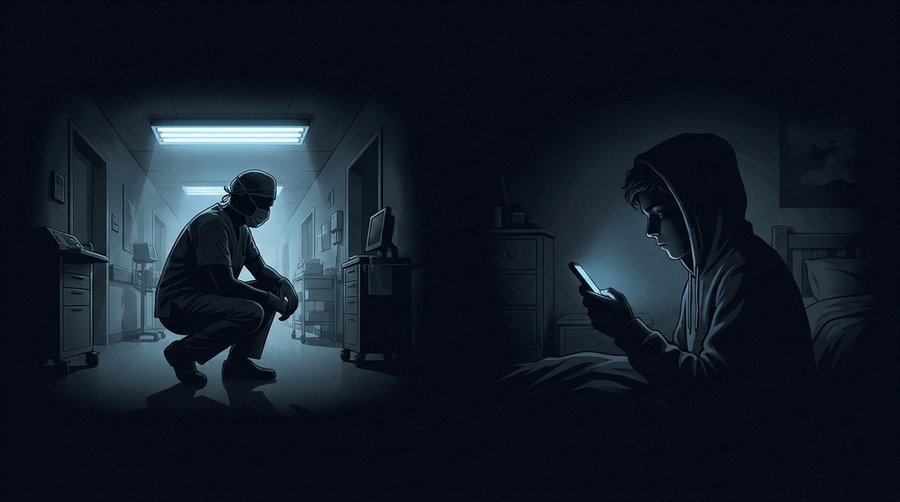
Averaged population risk figures obscure the groups for whom ALAN is not a background stressor but a defining health variable. The literature on vulnerable populations is where the most significant evidence gaps — and the most significant editorial gaps in competitor coverage — appear.
Children and Adolescents — Screens and Shifting Clocks
Adolescence is a period of profound circadian change. Puberty triggers a biological phase delay in the SCN — the circadian clock shifts later, independently of behaviour, by approximately two hours relative to pre-pubertal timing. This delay is not laziness. It is developmental physiology. Against this biological background, evening screen ALAN — from tablets, smartphones, and televisions, all emitting blue-rich light in the 450 to 490 nm range — adds a further phase delay that compounds the pubertal shift.
The result: DSPD prevalence among adolescents of 7 to 16%, compared to 0.17% in the general adult population. An adolescent with DSPD cannot attend school at 8:00 a.m. without a degree of functional impairment equivalent to asking an adult to perform at their best at 4:00 a.m. The EU school-start-time debate has a hard chronobiological basis that policy discussions rarely acknowledge. Screen ALAN is not the only cause, but it is the most modifiable one — and it is the one that is increasing fastest as screen time among children rises year on year.
The Ageing Eye: How Elderly Circadian Systems Degrade
Older adults face a double jeopardy in the ALAN landscape. First, the circadian system itself degrades with age: the SCN loses neurons, the amplitude of circadian outputs flattens, and DLMO timing becomes less consistent. Second — and less discussed — the ageing eye transmits progressively less short-wavelength light to the retina.
The human lens yellows with age through the progressive accumulation of chromophores in the crystalline lens. This yellowing acts as a filter, absorbing blue and short-wavelength light before it reaches the retina. Kessel and colleagues (2011, Ophthalmic Research) quantified the rate of change at approximately 0.7 to 0.8% per year at 480 nm. Across a lifespan from age ten to age eighty — a span of seventy years — this compounds to a reduction of approximately 49 to 56% in 480 nm transmission reaching the retina. The ipRGC system that requires 480 nm light to signal the SCN is, in an eighty-year-old, operating with less than half the input it had at ten.
The practical consequence: elderly people need substantially more bright light to entrain their circadian clock — yet they are often in the lowest-light environments, in care homes and hospital wards where lighting is designed for visibility, not for circadian health. The concept of circadian lighting design — fixtures that provide bright, blue-rich light during daytime and minimal light at night — is an evidence-based therapeutic intervention for elderly populations. It is not yet standard practice in European care infrastructure. For the clinical and architectural details, see our article on children, screens, and ALAN for the younger end of the vulnerability spectrum.
Shift Workers — Chronic Exposure at Scale
Shift workers are the population in whom the health consequences of chronodisruption are best documented and most severe. Approximately 15 to 20% of the OECD employed workforce works rotating or permanent night shifts — a population in the hundreds of millions. For this group, ALAN is not an ambient background stressor. It is the defining feature of their working environment: bright artificial light during their biological night, demanded repeatedly and systematically by their employment. The IARC Group 2A classification applies directly to them. The Nurses’ Health Study data describe them. The metabolic cascade outlined above is their chronic condition.
Environmental Justice — Who Bears the Burden?
Outdoor ALAN is not uniformly distributed across socioeconomic groups. In US cities, the Breast Cancer Prevention Partners (BCPP) have documented that Black, Indigenous, and People of Colour (BIPOC) communities face approximately twice the outdoor ALAN exposure of predominantly white neighbourhoods in the same metropolitan areas — a consequence of infrastructure investment patterns, commercial density, and zoning decisions that have concentrated artificial light in lower-income and minority communities. The health burden of light pollution is not colour-blind. Environmental justice in lighting policy — a phrase absent from virtually all technical lighting standards — is an equity question with documented biological consequences.
The Nordic Paradox
In Stockholm or Tromsø, artificial light at night hits a circadian system already stressed by extreme seasonal darkness.
I have written this article from Stockholm, at 59°N. In December, my city receives fewer than seven hours of daylight. In Tromsø, at 69°N, there is no direct sunlight at all for approximately two months — the polar night, running roughly from late November through January. This is not an edge case in European health geography. Scandinavia, the Baltic states, Scotland, and northern Russia together represent a substantial fraction of the European population living under conditions of extreme seasonal photoperiod variation. For a deeper exploration, see our dedicated article on Nordic chronobiology: polar night, midnight sun, and the ALAN paradox, and for the landscape of dark sky refugia near these populations, see our overview of dark sky places in Europe, including Øvre Pasvik — Europe’s northernmost dark sky park.
Polar Night, Midnight Sun, and ALAN — A Double Disruption
The Nordic paradox has two dimensions. First: during polar night, the circadian system’s entrainment window — the brief period in which it can receive calibrating zeitgeber signals — shrinks to the low-light hours around dawn and dusk. In Tromsø in December, this means the SCN must synchronise from a twilight signal that may last only minutes at the horizon. ALAN during these critical twilight windows — the very streetlight that makes it possible to walk safely in an Arctic city — partially masks the only calibrating signal available.
Second: seasonal affective disorder (SAD) prevalence in Nordic populations is substantially higher than in southern Europe. Swedish county data suggest around 8% of the population meets criteria for winter SAD, with a further 10% showing subsyndromal seasonal depression (Westrin and Lam 2007). These figures contrast with the 1 to 2% typically reported in Mediterranean populations. The interaction between ALAN and SAD — whether artificial light at night worsens seasonal mood disorders by further fragmenting the already-compressed winter dark phase — is a research question that remains underexplored.
The midnight sun creates the inverse problem. In Stockholm in late June, civil twilight never fully resolves to darkness. The ambient light level around midnight in midsummer is sufficient to suppress melatonin in photosensitive individuals even without a single artificial fixture. ALAN added to this background — the street lighting that a northern city must maintain year-round for road safety — produces a summer in which the SCN cannot complete its night-phase even at 2:00 a.m. Populations adapted over millennia to extreme photoperiodic variation face a new stressor: artificial light that operates at the exact wavelengths (480 nm) that their ipRGC system is most sensitive to, year-round, at intensities that overwrite whatever seasonal adaptation their circadian architecture might otherwise achieve.
What Nordic Research Tells the World
The Scandinavian chronobiology literature — from Akerstedt’s group at the Karolinska Institute in Stockholm to the Basel Centre for Chronobiology collaborations — offers the world something that mid-latitude health data cannot: a natural experiment in extreme circadian stress. Populations that maintain relatively good cognitive and metabolic health through extreme seasonal photoperiod variation are, in effect, demonstrating the plasticity of the human circadian system. The question for public health is how much of that plasticity survives ALAN exposure at northern latitudes — and whether the coming generation of Nordic residents, raised with LED screens from infancy, retains it.
What the Evidence Actually Shows
Not all light pollution evidence is equally strong. Transparency here is what separates science journalism from advocacy.
The health literature on ALAN spans a quality spectrum from randomised controlled trials to satellite-based ecological correlations — a range of approximately six orders of magnitude in methodological strength. Treating all of it as equivalent authority is not scientific communication. It is a form of advocacy dressed as evidence. For those who want to act on this science — engineers, planners, clinicians, policymakers — the quality gradient matters enormously. For the engineering and policy framework that follows from the evidence, see our article on how to reduce light pollution: engineering, policy, and ecological design.
Indoor vs. Outdoor ALAN — Weighing the Studies
Indoor ALAN evidence is strong. The Nurses’ Health Study cohorts are large, well-controlled, prospective, with detailed exposure data and decades of follow-up. The ICU sleep-mask RCTs — randomising patients to eye masks versus no eye masks in intensive care environments — show improved sleep quality and increased REM sleep with a simple, costless intervention. The NHANES bedroom-light associations are epidemiological but have robust sample sizes. For indoor ALAN, the effect on sleep, melatonin, and circadian phase is directly demonstrated in multiple species using multiple methods.
Outdoor ALAN evidence is weaker, and the distinction matters. The Kloog ecological studies and similar satellite-based correlations are inherently limited in their ability to isolate ALAN exposure from the confounders that cluster with it — urbanisation, noise, air pollution, diet, socioeconomic stress, access to healthcare. These studies have generated important hypotheses. They do not prove that the streetlight outside your window causes cancer. The honest summary is: the biological mechanism is established, the occupational-exposure evidence in humans is significant, and the ecological population-level data are consistent but not causal. Only one of the six competitor articles I reviewed for this piece made that distinction explicit. That is why evidence transparency is a differentiating feature of science journalism — not a hedging mechanism.
Hospitals, Care Homes, and Circadian Architecture
The hospital is where the evidence for actionable indoor ALAN management is sharpest — and where the implementation gap is largest. Multiple RCTs in intensive care settings have found that providing patients with eye masks and ear plugs significantly improves subjective sleep quality, increases REM sleep duration, and elevates nocturnal melatonin levels. These are not expensive interventions. They are passive, pharmacology-free, and demonstrably effective.
The architectural dimension goes further. EN 12464-1 (2021 revision), the EU’s indoor workplace lighting standard, now includes a section on circadian-effective lighting — explicitly acknowledging the melanopic component of light as a health variable distinct from simple visual illuminance. This represents a policy breakthrough. The standard does not yet mandate circadian-optimised lighting in care facilities, but it provides the technical vocabulary and measurement framework (melanopic equivalent daylight illuminance, m-EDI) for doing so. For the complementary road-lighting standard and its gaps, see our article on EN 13201 explained and what Europe’s standard leaves out.
European hospitals and care homes that implement circadian lighting design — high m-EDI light during daytime hours, rapidly dimmed and spectrally shifted warm lighting after 18:00 — are not pioneering experimental medicine. They are implementing a straightforward application of established photobiology. For elderly patients with degraded circadian amplitude, it may be among the most effective non-pharmacological interventions available. The gap between the evidence base and the current standard of care is, frankly, large. Measuring light pollution in indoor care environments — using melanopic irradiance meters rather than standard photometric instruments — is the first step toward closing it.
Frequently Asked Questions
Can streetlights really cause cancer?
The direct causal evidence for outdoor streetlights causing cancer in nearby residents does not yet exist. The IARC Group 2A classification applies to night shift work — high-intensity, chronic, occupational circadian disruption — not to ambient outdoor ALAN from passing by a streetlight. The ecological correlation studies (Kloog et al.) show population-level associations between ALAN and breast cancer incidence, but these cannot isolate the light from other urban confounders. The biologically coherent pathway exists: ALAN suppresses melatonin, melatonin has oncostatic properties, chronic suppression over years is plausibly harmful. That is a basis for precautionary action on lighting design. It is not yet a basis for claiming streetlights are proven cancer causes.
What colour light is safest to use at night?
Warm white at or below 2,700 K — ideally 2,200 K amber or PC-amber spectrum — minimises 480 nm melanopsin activation. The CIE S 026 framework quantifies melanopic equivalent daylight illuminance (m-EDI) as the relevant metric: a 2,700 K source at a given photopic lux level produces approximately 60% less melanopic irradiance than a 4,000 K source at the same lux level. For bedrooms, maximum darkness is best. For rooms where light is functionally needed after 21:00, the warmest available CCT, directed away from the eyes, with the lowest practical intensity, is the evidence-based recommendation.
Does daytime light compensate for nighttime ALAN?
Partially, and it is worth doing deliberately. Bright outdoor daylight — 10,000 to 100,000 lux, compared to a typical indoor office at 200 to 500 lux — is a powerful circadian zeitgeber that anchors the DLMO earlier and strengthens the amplitude of the circadian rhythm. Thirty minutes of morning outdoor light in direct sunlight is the most evidence-based non-pharmacological circadian intervention available. It does not, however, compensate for chronic nighttime ALAN. Strengthening the daytime zeitgeber signal reduces the phase-shift magnitude from a given ALAN dose — but does not eliminate melatonin suppression or undo the oncostatic consequences of chronic nighttime light exposure.
How does light pollution affect children differently?
Children and adolescents carry a double vulnerability. Pubertal biology shifts the circadian clock two hours later — independently of behaviour. Screen-based evening ALAN, peaking at 450 to 490 nm, adds a further delay on top of this biological shift. The result is DSPD prevalence of 7 to 16% in adolescents — compared to 0.17% in adults — and chronic sleep deprivation during the developmental period when learning, emotional regulation, and immune maturation depend most on adequate, well-timed sleep. Younger children show lens transmission characteristics that make them more sensitive to short-wavelength light than adults: before lens yellowing has accumulated, ipRGC stimulation per lux is higher. The combination makes children a higher-sensitivity population for both sleep disruption and circadian phase-shifting from screens.
Is the evidence stronger for indoor or outdoor light at night?
Substantially stronger for indoor ALAN. The occupational exposure studies (Nurses’ Health Studies) involve direct, documented, high-magnitude circadian disruption with decades of follow-up. ICU sleep-mask RCTs demonstrate direct physiological responses to indoor light removal under controlled conditions. Outdoor ALAN evidence rests primarily on ecological correlations and observational epidemiology — methodologically weaker designs that cannot control for the full cluster of urban confounders. This does not mean outdoor ALAN is harmless. It means the evidence hierarchy is not flat, and science communication should reflect that.