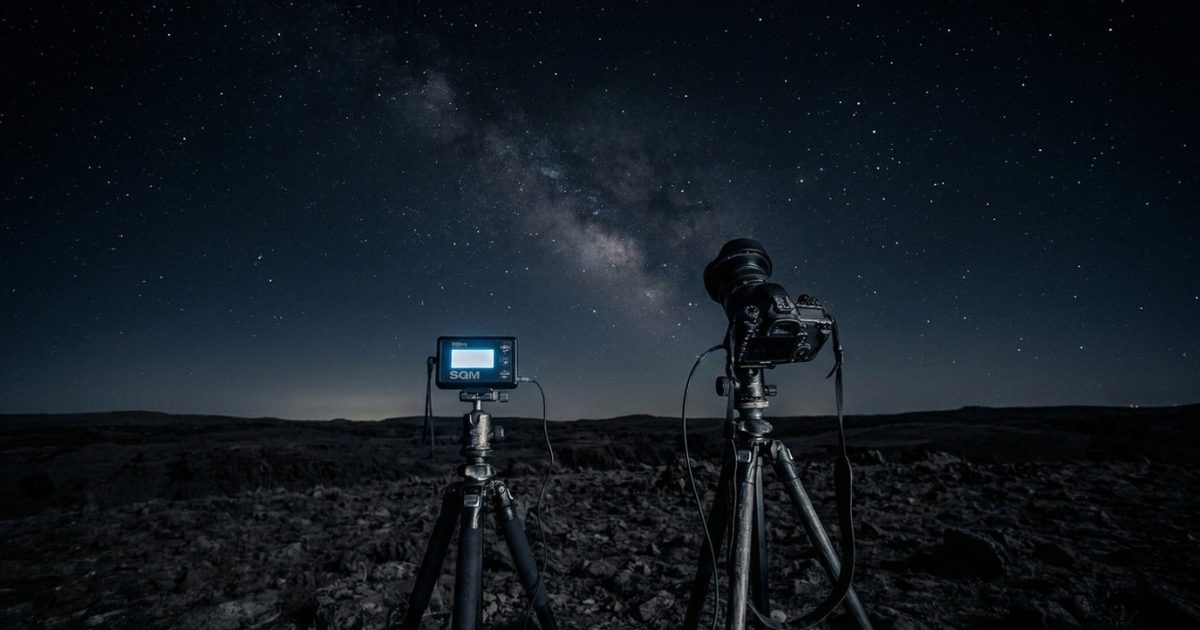
Between 2013 and 2016, Loss of the Night Network (LoNNe) — COST Action ES1204 — coordinated four field intercomparison campaigns at European sites ranging from Bortle 2 island skies to urban campus conditions. The headline finding was uncomfortable: Sky Quality Meters from different research groups, brought to the same site on the same night, produced systematic disagreements of up to ±0.19 mag/arcsec² under field conditions. That is nearly four times the annual sky-brightness trend that LED deployment produces. Before LoNNe, most European researchers assumed interchangeability. These campaigns proved the assumption wrong — and documented exactly what had to change. For the foundational overview of measurement methods, instruments, and satellite data, see our article on measuring light pollution: methods, data, and research tools.
Why an Intercomparison Was Needed
By 2013, SQMs were everywhere in European research — but no shared calibration protocol existed, and data from different labs could not safely be combined.
The Sky Quality Meter arrived in research labs around 2006 and spread rapidly. Inexpensive, robust, trivially simple to operate — within a few years, dozens of European research groups were running SQM networks, logging zenith sky brightness in mag/arcsec² and comparing readings across sites. The assumption behind those comparisons was that any SQM-L pointed at the same sky on the same night would produce the same number. It was a reasonable assumption. It was wrong.
Unit-to-unit variability in the SQM product line had been documented in limited laboratory studies, but field conditions add layers the lab cannot reproduce: thermal gradients around the instrument, varying atmospheric extinction on different nights, observer-presence effects, slightly different zenith-pointing angles across observers. The cumulative result is a systematic floor of measurement uncertainty that makes longitudinal trend data from different instruments unreliable unless calibration has been explicitly cross-checked against a common reference.
This was not an academic problem. The sky-brightness trends that European researchers were trying to detect — the annual change caused by LED retrofitting, energy-saving regulations, or new development — operate at 0.02 to 0.05 mag/arcsec² per year. An unchecked instrument offset of 0.1 to 0.2 mag/arcsec² between two monitoring stations swamps a decade’s worth of trend signal. In LoNNe circles, this was an open problem. The intercomparison campaign series was the direct response. For the broader context on why ALAN measurement requires cross-instrument discipline, see our article on ALAN — artificial light at night: the research framework.
COST Action ES1204 — formally titled Loss of the Night Network — ran from October 2012 to October 2016, with 19 countries represented in the Management Committee and four Working Groups covering ecological effects, measurement methodology, human health impacts, and policy. The intercomparison campaign series sat within Working Group 2 (measurement) and was the network’s most concrete instrument-science deliverable. Four campaigns. Four European sites. A fifth measurement event added at Chelmos, Greece, in September 2015. All published.
Campaign 1 — Lastovo Island, Croatia, 2013
The first LoNNe field intercomparison used one of Europe’s darkest accessible sites as its baseline — a deliberate choice to establish instrument agreement under best-case conditions before tackling the harder urban measurements.
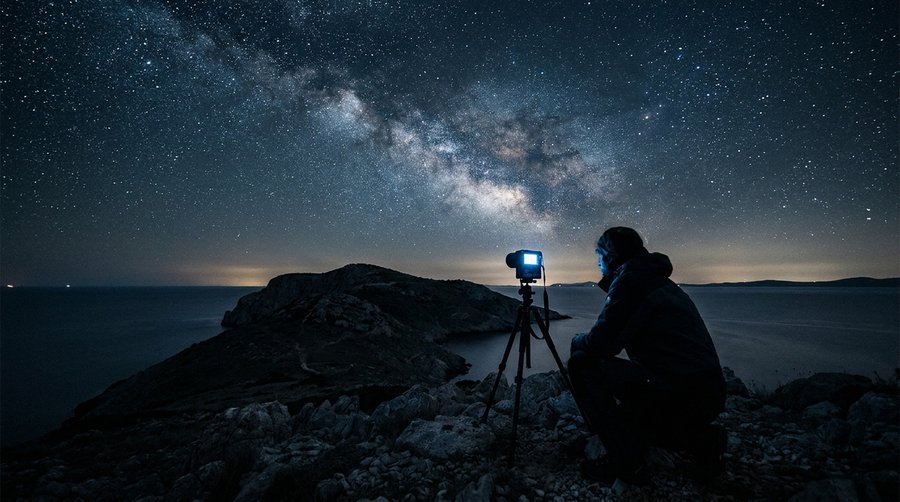
Lastovo Island, in the southern Adriatic, sits well outside any major urban light dome. Sky readings at Lastovo regularly reach Bortle Class 2 — the “truly dark sky” category where M33 is directly visible and the Milky Way casts faint ground shadows. Choosing a pristine dark site for the first campaign was methodologically sound: if SQMs disagree significantly at a site with no competing light sources, no nearby urban dome, and stable atmospheric conditions, the discrepancy is unambiguously the instrument, not the environment.
The 2013 campaign also incorporated a training school component — researchers from multiple LoNNe member countries attending both to collect data and to learn standardised observation protocols. That dual function mattered. Calibration data has limited value if the observers who collected it use incompatible field procedures afterward. The training component embedded the protocols alongside the measurements. Multiple SQM units were compared simultaneously on the same nights, alongside DSLR cameras and luxmeters, producing the first multi-instrument dataset under the LoNNe framework.
A dark reference site also provides the cleanest test of all-sky camera performance: the full hemisphere is sky, with no local light sources contaminating the frame, making angular sky-brightness gradients visible that would be masked at a suburban site. The Lastovo campaign established that all-sky fisheye cameras captured sky-brightness spatial variation that a single SQM zenith reading could not represent — a finding that would grow more important in the urban campaigns that followed. For the full technical treatment of SQM variants and their field limitations, see our SQM buyer’s guide: L vs. LU vs. LU-DL.
Campaign 2 — UCM Madrid, Spain, 2014
The Madrid campaign shifted from dark-sky baseline to the harder problem: measuring systematic SQM uncertainty across an urban-to-rural gradient, with multiple instrument classes running simultaneously.
The second LoNNe intercomparison campaign was hosted by the GUAIX group — Grupo de Astrofísica Extragaláctica e Instrumentación Astronómica — at the Physics building of Universidad Complutense de Madrid (UCM). Alejandro Sánchez de Miguel coordinated, with a team that included Salvador Bará, Brian Espey, Fabio Falchi, Christopher Kyba, and other LoNNe partners. The formal report is archived at UCM’s eprints repository (eprints.ucm.es/id/eprint/32989/).
The 2014 campaign’s key innovation: measurements taken at two sites simultaneously, an urban location and a dark rural site outside Madrid. The contrast allowed the team to assess whether instrument offsets remained consistent across the full dynamic range of sky conditions, or whether systematic errors interacted with sky brightness in non-linear ways. Urban sites also introduce light from multiple azimuths at low elevation angles — conditions where the SQM’s 20° FWHM acceptance angle means it misses the horizon glow that often dominates a suburban sky.
The 2014 report documented the overall measurement uncertainty for SQM-L instruments in field conditions at approximately ±0.186 mag/arcsec² — the figure P6 carries rounded to ±0.19. That number is the honest floor. It combines unit-to-unit variability, calibration drift over the instrument’s service life, and protocol differences between observers. Three specific recommendations emerged from the Madrid campaign: cross-calibration against a common reference site before any multi-observer dataset is combined; standardised zenith-pointing protocols with documented deviation tracking; and the inclusion of an all-sky camera at any site where the horizon glow gradient is expected to deviate significantly from the zenith reading.
Campaigns 3 and 4 — Italy 2015, Montsec Spain 2016
The Italian and Spanish campaigns added spectral instrumentation and all-sky cameras as primary instruments, shifting the methodology from “do SQMs agree” to “what does the SQM miss that cameras and spectroradiometers can see.”
The 2015 campaign was organised in Tuscany by Attivarti.org and IBIMET (Institute of BioMeteorology, a CNR institute), with LoNNe partners from across Europe attending. Two sites: Torniella, a dark rural location in the Maremma area with Bortle 3–4 skies, and Florence, a fully urban reference site. The rural-to-urban gradient replicated the Madrid innovation but in a different climatic and geographic setting, adding geographic replication to the campaign series. Multiple SQM variants, calibrated fisheye cameras, and spectroradiometers all ran simultaneously at both sites.
An additional measurement event — the fifth across the LoNNe network period — was organised at Chelmos Observatory in Greece in September 2015, ahead of the LoNNe working group meeting in Athens. Chelmos sits at approximately 2,340 m elevation in the Peloponnese mountains. The high-altitude, low-aerosol site provided atmospheric transparency context that lower-altitude sites cannot offer, and the Chelmos event extended the campaign series’ geographic and climatic range beyond the western Mediterranean corridor.
The 2016 campaign was the most instrument-dense of the series, held at Montsec Astronomical Park (Parc Astronòmic Montsec, Centre d’Observació de l’Univers — PAM-COU) in Catalonia, Spain. This campaign ran under the joint LoNNe/STARS4ALL banner — STARS4ALL being the H2020 project (grant 688135, 2016–2018) that took LoNNe’s citizen-science and measurement infrastructure forward after the COST Action ended. Hänel et al. (2018, Journal of Quantitative Spectroscopy and Radiative Transfer, 205: 278–290; arXiv:1709.09558) synthesised the Montsec methodology and the broader campaign series, concluding that calibrated fisheye DSLR cameras with characterised spectral response provide the best balance between ease of use and information richness. A single 180° fisheye exposure yields sky brightness across the full hemisphere in three colour channels — capturing the blue-LED contribution that the SQM’s narrow filter cannot detect. For the detailed connection between Falchi 2016 and Kyba 2017 and the measurement infrastructure these campaigns built, see our article on the Falchi 2016 and Kyba 2017 data explained.
What the Campaigns Established
Three conclusions from the campaign series became the de facto calibration doctrine for European light pollution research. None of them were obvious before the campaigns ran.
The first finding was the ±0.19 mag/arcsec² floor. That figure is not a worst-case outlier. It is the measured central tendency of SQM-L field uncertainty under real campaign conditions — different observers, different nights, same instrument model. The Madrid 2014 report documented it explicitly. Many subsequent publications cite “±0.15 mag/arcsec²” as the intercomparison result; that number is the laboratory specification. The field number is higher. The distinction matters for any meta-analysis trying to combine monitoring data from different European networks.
The second finding was the LED blindspot in quantitative form. Hänel et al. 2018 benchmarked five instrument classes and showed that a standard SQM at a site undergoing HPS-to-LED lamp replacement can report stable or even slightly improved sky brightness while a calibrated fisheye camera recording the same sky in three colour channels shows a measurable shift toward blue emission. The SQM filter is centred near 550 nm — calibrated for the sodium-vapour world. White LED street lights add a substantial blue component in the 400–505 nm range that the SQM suppresses. The campaigns that included spectroradiometers — particularly Torniella and Montsec — demonstrated this mismatch directly. Kyba et al. (2017, Science Advances) saw the same blindspot from orbit via VIIRS DNB; LoNNe’s field campaigns had identified the ground-level analogue in parallel.
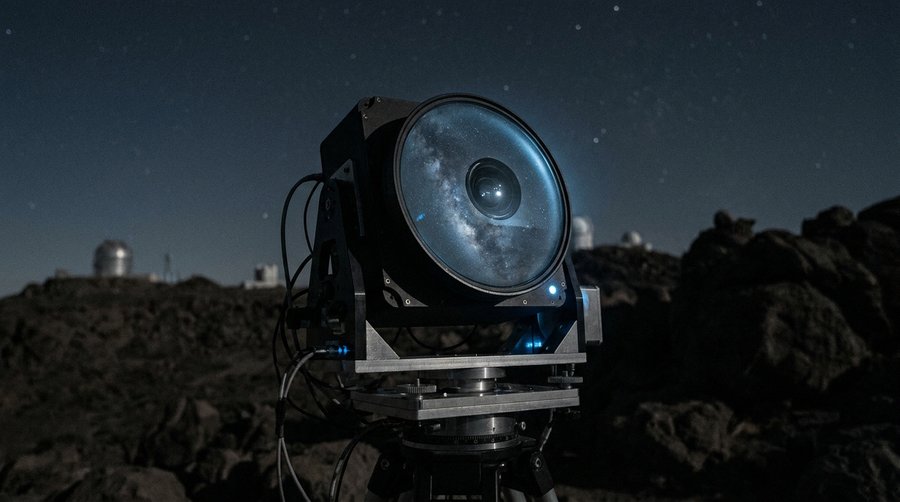
The third finding repositioned the role of all-sky cameras. Going into the campaign series, fisheye cameras were considered supplementary — useful for wider spatial coverage but not primary instruments. The Torniella, Chelmos, and Montsec campaigns inverted that hierarchy. A properly calibrated fisheye DSLR captures the full hemisphere simultaneously in three colour channels, allows the extraction of a synthetic SQM reading for any pointing direction, and maps the sky-glow gradient from all azimuth directions — information that a single-zenith SQM reading cannot provide. The dual-unit translation between mag/arcsec² and μcd/m², standardised during the campaign series for cross-community communication, made the camera data legible to lighting engineers as well as astronomers. Falchi et al. (2016, Science Advances) relied on the calibration framework these campaigns established for its 35,000-measurement ground-truth dataset.
The Legacy: Why LoNNe Still Matters in 2026
The COST Action ended in 2016. The measurement protocols, calibration datasets, and citizen-science tools it produced are still the operational foundation of European light pollution research.
The formal network dissolved with the funding period. The researchers, the methods, and the data did not. GFZ Potsdam (Kyba) continues satellite and citizen-science analysis — the 2023 Science paper showing +9.6%/yr stellar visibility decline built on the Globe at Night pipeline LoNNe helped develop. UCM Madrid (Sánchez de Miguel, GUAIX) extended Cities at Night ISS photography into a spectral mapping tool tracking the HPS-to-LED transition across European cities. STARS4ALL (H2020, 2016–2018, coordinated by Universidad Politécnica de Madrid) deployed the TESS-W photometer network from approximately 100 units at launch to a genuinely global deployment. Franz Hölker’s ecology group at IGB Berlin continued publishing on dark infrastructure and ALAN ecology; their work on dark corridor design connects to the Natura 2000 policy track. For that research, see our article on light pollution and wildlife. Globe at Night runs annual campaigns with the methodology LoNNe validated — for a step-by-step guide, see our Globe at Night citizen science tutorial.
The gap LoNNe leaves is structural. A coordinated network that forced different laboratories to cross-validate instruments, produced shared calibration datasets, and published them openly — nothing has replaced that function. Individual groups publish. No mechanism currently requires cross-validation before data from different national networks combines. No single paper or photometer network recreates bringing 30 researchers with 20 instruments to the same field site on the same night. That is what the campaigns did. It is why they still matter.
For those who want to situate what these measurement debates mean at the human level — the loss they document, quantified and published, still largely unaddressed in EU policy — see our article on noctalgia: the language of losing the night sky.
Frequently Asked Questions
What was COST Action ES1204?
COST Action ES1204 was the European scientific network formally titled Loss of the Night Network (LoNNe), coordinated by IGB Berlin and running October 2012 to October 2016. Nineteen countries held Management Committee seats, with additional affiliated participants across four Working Groups: ecological impacts, measurement methodology, human health, and policy. The intercomparison campaign series — testing SQM and camera instruments from different laboratories at shared field sites — was the network’s primary measurement-science deliverable.
Why did SQMs need cross-calibration?
Two SQM-L units of identical model can disagree by 0.1 to 0.19 mag/arcsec² in field conditions, accumulating from thermal drift, filter coating variation, calibration history, and protocol differences. Sky-brightness trends from LED deployment operate at 0.02–0.05 mag/arcsec² per year. An unchecked instrument offset masks or mimics several years of genuine trend. LoNNe’s campaigns provided the protocols and uncertainty estimates that make combined multi-observer datasets valid.
Where can I find LoNNe data and reports?
The 2014 UCM Madrid report is at UCM eprints (eprints.ucm.es/id/eprint/32989/). The 2016 Montsec report is at GFZ Public and ResearchGate. Hänel et al. (2018) — the method-synthesis paper — is at arXiv:1709.09558 and in Journal of Quantitative Spectroscopy and Radiative Transfer 205: 278–290. The original cost-lonne.eu website remains partially accessible and links to Working Group outputs.
What replaced LoNNe after 2017?
No direct successor replaced LoNNe’s cross-validation function. STARS4ALL (H2020, 2016–2018) continued citizen-science outreach and deployed the TESS-W photometer network. The Loss of the Night app, developed with Kyba’s GFZ group, continues collecting stellar-visibility data. GFZ Potsdam, UCM Madrid GUAIX, and IGB Berlin have all published substantially since 2016. What is absent is a funded European structure requiring instrument cross-calibration before national monitoring datasets combine.