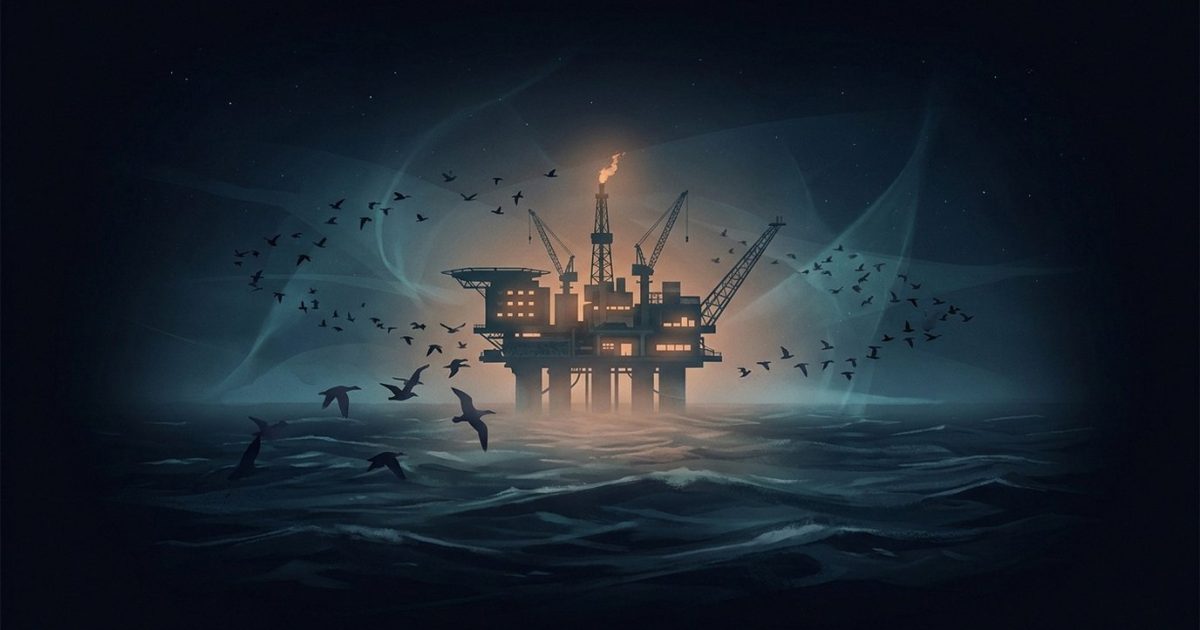
Roughly one billion birds are killed each year in North America alone by building collisions linked to artificial light at night (ALAN). In Europe the scale is less documented but the mechanism is identical. A 2008 field trial on a Shell gas platform in the southern North Sea cut the number of disoriented birds circling an offshore structure by 50 to 90% — through one change: the spectrum of the lights. That result, from Poot et al. in Ecology and Society, remains the clearest industrial proof that spectral tuning works at scale. For the broader picture of how ALAN reshapes ecosystems, the parent overview is light pollution and wildlife: how ALAN destroys ecosystems.
Why Migrating Birds Are Drawn to Light
Migrating birds navigate by stars, magnetic field gradients, and polarised twilight — and ALAN disrupts all three simultaneously.
Nocturnal bird migration is one of evolution’s more precise engineering achievements. Billions of songbirds cross Europe each spring and autumn navigating at altitude, calibrating their stellar compass against the rotation of the night sky. Stellar navigation requires genuine darkness: a clean background against which Polaris and the surrounding constellations can be resolved. Under skyglow, the background disappears. The navigational signal drowns.
The magnetic compass is the second layer. Magnetoreception in night-migrating birds operates through light-sensitive cryptochromes in the retina — a radical-pair mechanism that requires the right photon input to function. Mouritsen (2018, Nature 558:50–59) reviewed the full mechanistic picture: no single cue enables long-distance accuracy; instead, birds integrate stellar, magnetic, and polarised-light signals across the full journey. ALAN degrades each of these inputs. Mouritsen’s earlier controlled work with European robins (Erithacus rubecula) at Oldenburg — where birds in illuminated huts failed to orient correctly — demonstrated that even low-level electromagnetic interference near urban light sources is sufficient to break compass function entirely.
The result is phototaxis at scale. Birds drawn toward lit urban cores lose orientation, circle exhausting themselves, and funnel into densely built corridors precisely where glass facades are most concentrated. Cornell Lab of Ornithology radar analyses show that a single high-intensity light installation in New York City displaced thousands of migrating birds from their flight paths in a single night. The effect is not additive. It is multiplicative: attract the bird, disorient it, expose it to glass.
Bird tetrachromatic vision compounds the problem. Birds possess four colour receptors including ultraviolet sensitivity — wavelengths entirely invisible to humans but fully detectable by avian photoreceptors. A facade that appears unlit at night may still emit UV components that trigger phototactic attraction in migrants. This spectral dimension is absent from most building lighting regulations, which specify luminance thresholds without wavelength constraints.
The Scale: Annual Bird Mortality from ALAN
North American estimates run to one billion collisions per year; Europe lacks equivalent monitoring infrastructure, but the Fatal Light Awareness Program has built the most rigorous urban dataset available.
Loss et al. (2014, The Condor) consolidated the North American evidence: between 365 million and 988 million birds die annually in building collisions, with ALAN identified as the primary driver of the nocturnal collision fraction. Glass is passive; artificial light is the active agent that routes birds toward it.
In Toronto, the Fatal Light Awareness Program (FLAP), founded in 1993 by volunteers responding to mass migration-window mortalities in the downtown core, has documented more than 99,000 birds from 178 species recovered from a handful of monitored buildings in the Greater Toronto Area. Each year, FLAP volunteers recover 3,000 to 5,500 birds — injured and dead — from a small monitored sample of the city’s glass stock. Extrapolated across the full Canadian building inventory, the estimated annual toll exceeds 25 million birds. Toronto’s Lights Out programme — coordinating voluntary facade darkening during peak spring and autumn migration windows — is among the most data-rich before-and-after urban intervention datasets in the field.
European equivalent data are sparse. Monitoring infrastructure comparable to FLAP does not exist at city scale in any EU member state. Frankfurt’s Lichtwächter programme and scattered national ornithological society records provide partial signals, but no European city has produced migration-window mortality estimates with FLAP-grade spatial resolution. This is a structural gap. The mechanism is identical to North America; the data collection is not. For context on the broader ALAN research framework that defines these measurement challenges, see ALAN — artificial light at night: the research framework.
The Shell L15 North Sea Experiment
A single spectral change on an offshore gas platform cut bird casualties by 50 to 90% — and the mechanism is reproducible across any offshore structure using conventional white or red lighting.
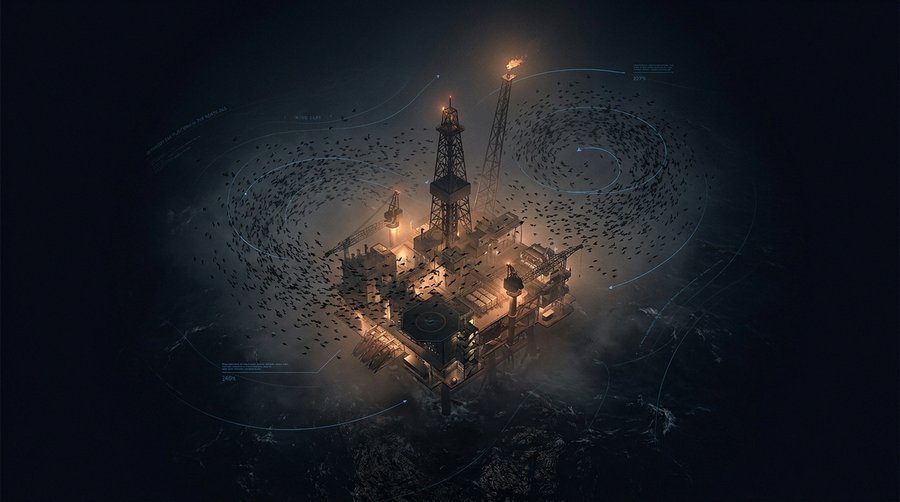
This is the study that the collision-prevention literature routinely ignores. In May 2007, Nederlandse Aardolie Maatschappij (NAM) — a Shell subsidiary operating in the southern North Sea — converted the external lighting of its offshore gas-production platform L15, situated approximately 20 kilometres off the barrier island Vlieland in the Netherlands, from conventional mixed-spectrum white and red sources to a green-spectrum system low in long-wavelength radiation. The trial was designed in collaboration with Philips Lighting and documented by Poot et al., published in Ecology and Society (2008), volume 13, issue 2, article 47.
The findings are stark. Nocturnally migrating birds are strongly attracted and disoriented by red and white light — both of which contain visible long-wavelength radiation above approximately 600 nm. Under the green-spectrum replacement, 2 to 10 times fewer birds were observed circling the platform in confusion compared to the conventional lighting system. On overcast nights — when the disorientation problem peaks because stellar navigation is unavailable and birds rely more heavily on their magnetic compass — the reduction was consistently at the higher end of that range. Fifty to ninety percent fewer birds were negatively affected by a lighting specification change that did not materially reduce the platform’s operational illumination level.
Three things make L15 matter beyond its immediate result. First, this is an industrial-scale field trial, not a laboratory simulation. The platform is a real working structure; the birds are real migrating populations; the confounds are minimal. Second, the mechanism is spectral, not intensity-based. The green system was not dramatically dimmer than its predecessor — it was shifted away from the long wavelengths that trigger avian phototaxis and disorientation most strongly. Third, the platform sits in the southern North Sea, a major migratory corridor for passerine birds crossing between Scandinavia, the British Isles, and continental Europe. The intervention is directly replicable at offshore wind farms, gas platforms, and research stations across the North Sea and Baltic — all of which currently use white or red warning and operational lighting as standard.
If 50 to 90% of bird attraction to offshore structures is preventable through spectral specification alone, the cumulative conservation gain across European offshore infrastructure is substantial. Current offshore wind capacity in the North Sea involves hundreds of structures. None of them are required by EU regulation to use spectrally tuned lighting. For the engineering principles behind fixture specification, see how to reduce light pollution: engineering, policy, and ecological design. For the skyglow physics that explains why spectral composition changes propagation and visibility, see skyglow: causes, reach, and why it stretches 200 km.
EU Species Most at Risk
The EU Birds Directive lists 197 species in Annex I for special protection — and the migratory passerines most exposed to ALAN are among the most numerically significant of those populations.
Directive 2009/147/EC — the EU Birds Directive — requires member states to classify Special Protection Areas (SPAs) for 197 species and sub-species listed in Annex I. These are species identified as vulnerable to extinction, susceptible to specific habitat changes, or restricted in distribution. Migratory status is a core selection criterion, making songbirds that navigate through Europe’s most illuminated corridors disproportionately represented.
Warblers, thrushes, and flycatchers bear the highest exposure risk. These are small, nocturnal migrants crossing urban corridors — the guild that FLAP data shows most heavily represented in building collision recoveries. Ficedula hypoleuca (pied flycatcher), Sylvia warblers, and multiple thrush species use the same corridors as the densest commercial building stock. Coastal migrants — waders and seabirds transiting North Sea and Baltic routes — add an offshore exposure component that the L15 study directly addresses.
Offshore oil and gas platforms and the growing North Sea wind farm network represent a category of ALAN source with no land-side equivalent. Their isolation at sea concentrates migrating birds — particularly on overcast nights when there is no other light source for hundreds of kilometres. The EU Habitats Directive 92/43/EEC, alongside the Birds Directive, provides the legal framework for species protection, but neither directive contains ALAN-specific lighting standards for offshore infrastructure. The SPAs designated for seabird colonies breeding on Helgoland, the Frisian Islands, and other North Sea and Baltic sites do not include spectral requirements for the offshore structures their designated species fly past during migration.
This is an enforcement gap, not a scientific one. The evidence from L15 is clear and reproducible. The regulatory mechanism — applying existing species-protection obligations to a documented threat — exists in theory. It has not been operationalised.
What Works: Solutions and Where Europe Stands
Lights Out programmes, spectral tuning, and bird-friendly building design all demonstrably reduce ALAN mortality — Europe has the evidence but not yet the binding standards.
The Chicago Lights Out programme — coordinating voluntary facade darkening during peak migration windows — documented a 60% reduction in bird-building collisions during spring and autumn in participating buildings. Toronto’s equivalent FLAP data corroborates this: Lights Out interventions produce immediate, measurable mortality reductions in the first migration season. The intervention costs nothing beyond coordination.
Spectral tuning, as the L15 trial established, is the most powerful single tool for offshore and illuminated-structure contexts. Green and blue-shifted sources dramatically reduce the phototactic attraction that pulls migrating birds off course. On land, amber LEDs at 2,200 K reduce insect attraction substantially; the parallel for birds is somewhat different — the key variable is reducing long-wavelength red and white components rather than simply shifting to amber — but the principle of spectral specificity is the same.
Building design is the third strand. Austria’s ONR 191040 standard, introduced in 2010, provides the world’s first formal test protocol for bird-friendly glass — using flight tunnel experiments in which birds choose between marked and unmarked panes. Switzerland’s Ornithological Institute at Sempach has established comprehensive guidelines increasingly demanded in building permit procedures. These are the most developed regulatory frameworks in Europe. No equivalent binding EU standard exists. The EU taxonomy for sustainable buildings does not yet include ALAN-specific glass requirements relevant to bird collision risk.
The German LAI 2012 advisory guidelines and France’s 2018 lighting decree address spectral quality and curfews for terrestrial lighting — discussed in detail at France’s 2018 lighting decree and EN 13201 explained — but neither document addresses offshore structure lighting or building-glass specifications for bird collision. The dark infrastructure concept developed by Sordello, Longcore and colleagues (2022) focuses on terrestrial connectivity corridors; its application to offshore migration routes is a logical extension not yet formalised in EU policy. For dark infrastructure in the Natura 2000 context, see dark infrastructure: the Dutch Donkerte-Netwerk and Natura 2000 corridors.
The regulatory gap is real. The EU protects 197 Annex I bird species. It does not regulate the spectral composition of the lights that kill them during migration.
Frequently Asked Questions
How many birds die from light pollution each year?
In North America, Loss et al. (2014, The Condor) estimated 365 million to 988 million bird deaths per year from building collisions, with ALAN as the primary driver of the nocturnal fraction. Across Canada alone, FLAP estimates exceed 25 million annual collision fatalities. European figures are not quantified at equivalent resolution — systematic urban migration-window monitoring comparable to Toronto’s FLAP programme does not exist in EU member states. The mechanism is identical; the monitoring infrastructure is not.
What is the Shell L15 experiment?
In May 2007, NAM (Nederlandse Aardolie Maatschappij, a Shell subsidiary) converted the external lighting of its offshore gas platform L15 — approximately 20 km off Vlieland in the southern North Sea — from conventional white and red sources to green-spectrum lighting low in long-wavelength radiation. Poot et al. (2008, Ecology and Society 13(2):47) documented the result: 2 to 10 times fewer migrating birds were observed circling the platform in confusion under the green system — a 50 to 90% reduction. The trial is the strongest industrial-scale evidence that spectral tuning prevents avian disorientation at offshore structures.
Does turning off lights actually save birds?
Yes, with documented results. Chicago’s Lights Out programme produced a 60% reduction in bird-building collisions during migration windows in participating buildings. FLAP data from Toronto shows immediate mortality reductions in the first migration season following voluntary facade darkening. For offshore structures, spectral tuning — as demonstrated at L15 — achieves equivalent results without eliminating operational lighting. Both interventions are implementable without new infrastructure.
Which European bird species are most affected by light pollution?
Small nocturnal migrants bear the highest collision risk: warblers, flycatchers, and thrushes crossing urban building corridors are the species most represented in European collision records. Offshore migrants — seabirds and waders transiting North Sea and Baltic routes — face the additional hazard of offshore platforms and wind farm infrastructure. The EU Birds Directive Annex I lists 197 species requiring special conservation measures; migratory passerines and coastal seabirds are disproportionately represented given their dependence on navigational cues that ALAN disrupts.